Choose measurements from the wearing construction
A decorative face measurement does not describe an ear post, and the word Long does not provide a chain-cuff drop. Start with the selected earring's construction, then request the dimensions that answer your buying question.
A buyer may need to compare display scale, fastening, contact area or the overall outline of an assortment. Those are different tasks. One number called Size rarely answers all of them. A useful measurement request says what is being measured, where the measurement starts and ends, and which selected product it describes.
This guide uses three Relia references to build that request. Where a listing does not establish a fastening mechanism or a dimension, the guide leaves it as a question. It does not supply a universal ear-fit chart, promise comfort or infer the number of items included in a purchase.
Confirm the form before making a measurement checklist
Product titles can contain several form words because they describe a broad style or search context. Do not assume each word names a separate available version. Check the actual option menu and the product-specific description, and ask for the photographed selection to be identified where the construction remains unclear.
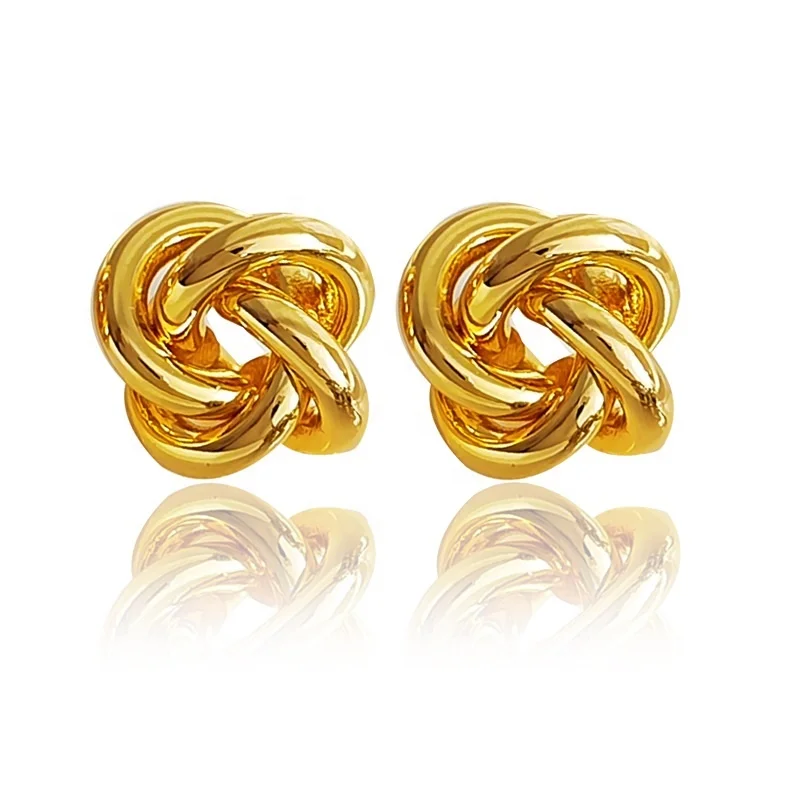
Product 21641 includes Stud, Hoop and Dangle in its title. Its table identifies Stud Earrings, while the actual selectable Color label is Gold. That is not evidence of three selectable fastening forms. A buyer should ask which construction belongs to the chosen Gold reference rather than creating imaginary Stud, Hoop and Dangle order lines.
Likewise, a chain-cuff title can describe the round contact element, the hanging chain and the tassel appearance without offering separate hoop and cuff variants. Keep those descriptive elements in context. If the supplier needs an annotated photograph to understand your question, mark the relevant part without drawing a hidden mechanism that has not been confirmed.
Start here: product reference, full option label, chosen view, fastening question. Only then add the dimensional fields appropriate to that construction.
For studs, separate the decorative face from the post and closure
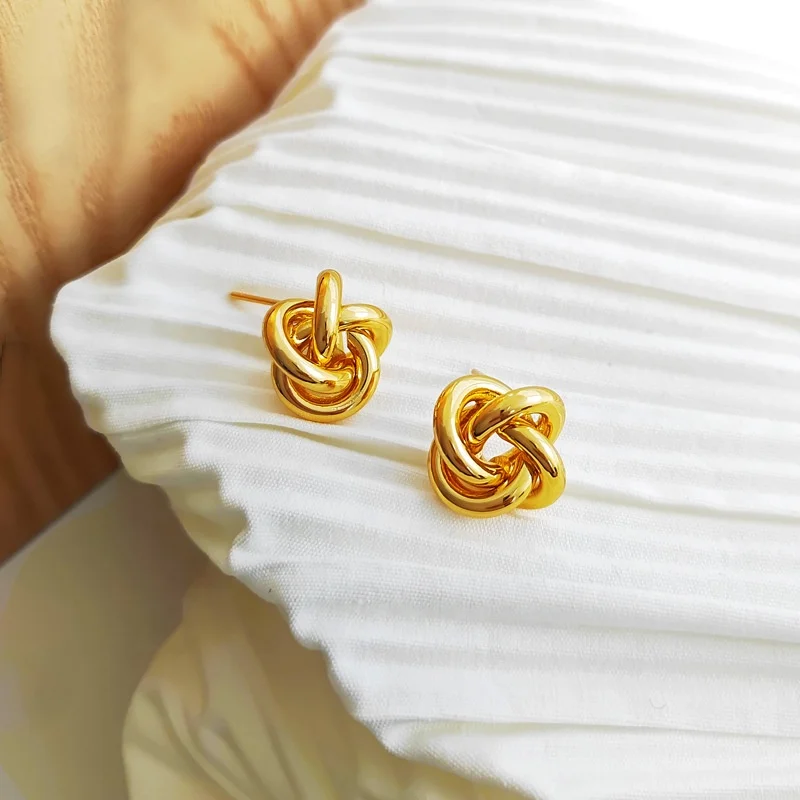
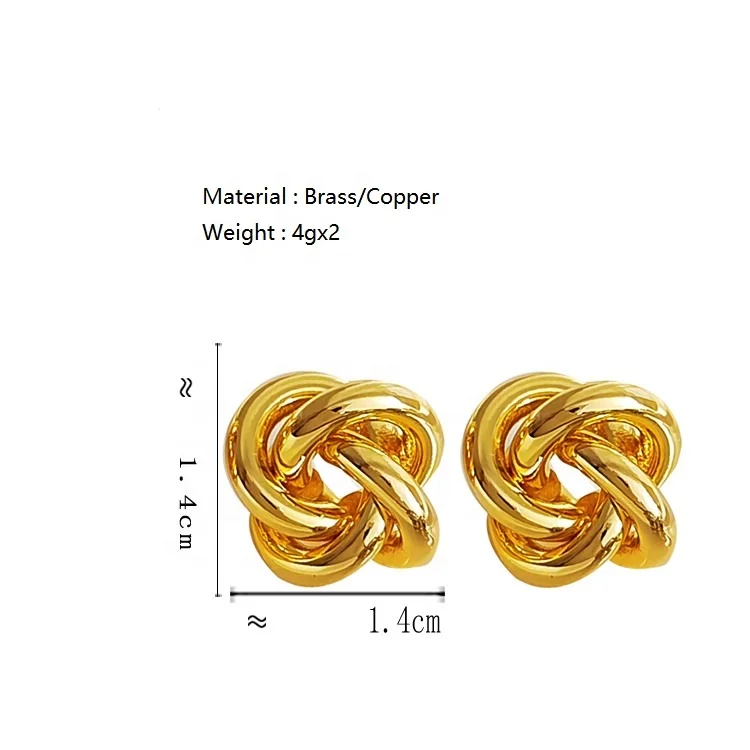
The decorative face controls one part of the appearance. Its width and height are separate from how far the ornament projects, the post dimensions and the closure supplied. If your assortment brief only says “small stud,” the supplier may not know which of these aspects you want to compare.
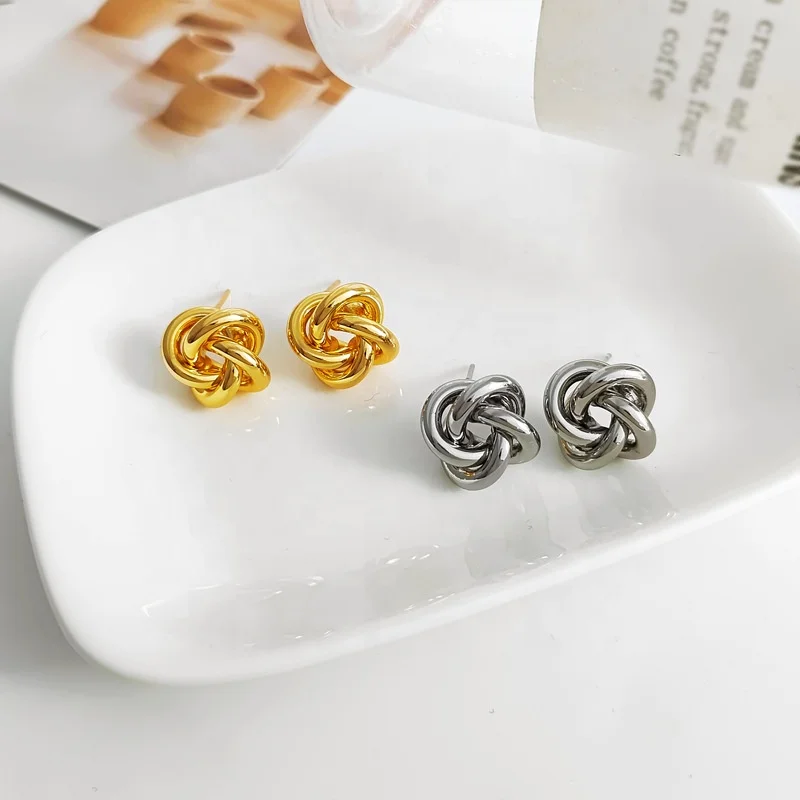
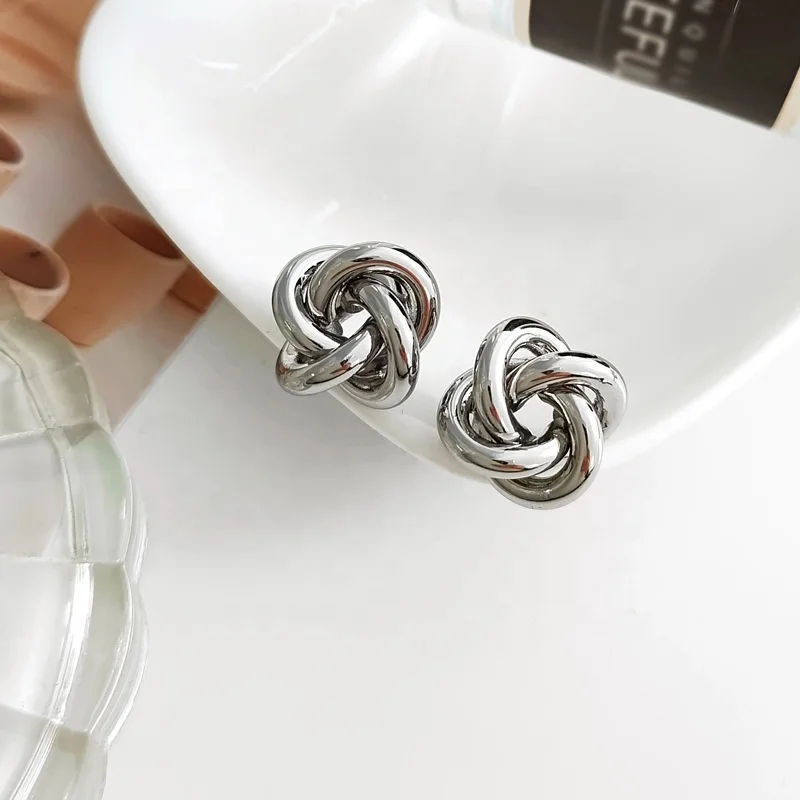
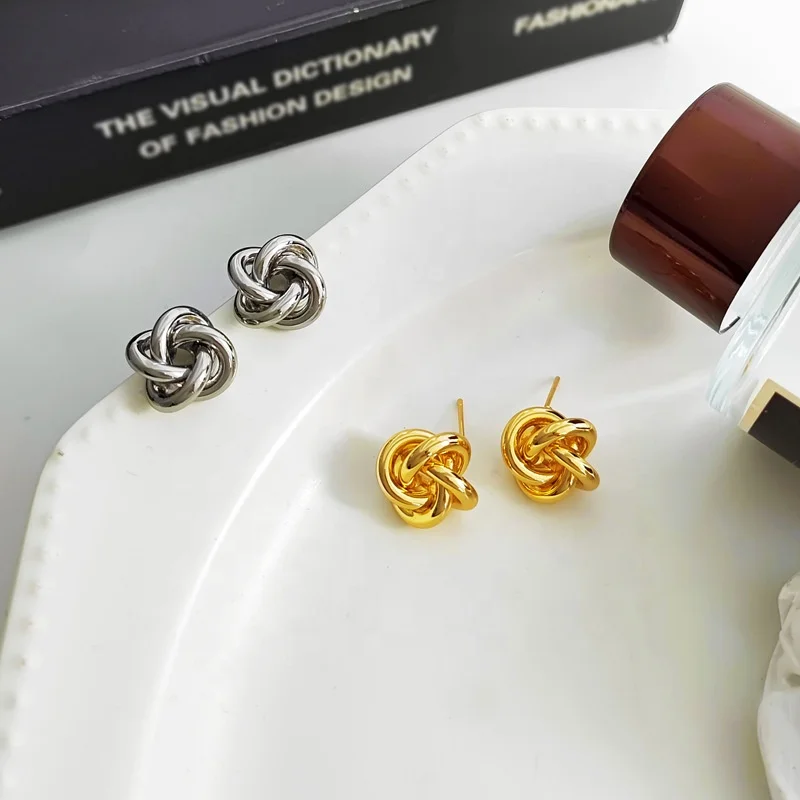
Relia product 21850 offers the Size label 0.79'' * 0.71'', the Design label Classic and the Color choices Gold or Silver. Preserve the complete combination in an enquiry. Ask what the two size values measure and in which orientation, rather than assuming that they describe the post or an overall assembled depth.
The same listing uses brass in its material fields and Gold Plated in its plating description. The Silver appearance option should not be rewritten as a claim of solid silver. Measurements and material questions may share the same enquiry, but they should remain separate fields so an answer about the decorative face does not appear to settle the contact-part specification.
Useful stud questions
- What do the stated width and height measure on the selected option?
- What is the projection from the relevant mounting or contact plane?
- What post dimensions apply, if a post is used?
- Which closure is supplied, and is its material specified separately?
- Is the quoted supply unit a single item, a pair or another confirmed quantity?
These are requests, not specifications already established by the size label. If a measurement cannot be supplied, keep the gap visible rather than filling it with a number from a superficially similar item.
For a hoop, ask which inside dimension is relevant
Where the selected item is confirmed to be a hoop construction, inside dimensions and outside dimensions answer different questions. An outside outline may help assess visual scale, while an inside measurement describes a different space. State which one you need and ask the supplier to label the measurement clearly.
Do not require a single diameter if the form is not circular. A non-circular design may need more than one internal measurement to communicate its usable opening. Ask for the orientation or a marked view so your team does not compare one supplier's inside width against another supplier's outside height.
The opening or fastening deserves a separate question. A product name is not enough to establish whether a particular hinge, wire or other closure is present. Request an identification of the mechanism for the selected photographed style before describing it in a product brief. Avoid drawing an assumed hinge into your worksheet as if it were a known component.
This matters especially for a title such as product 21641, where several form words coexist but the available option is simply Gold. The hoop checklist becomes relevant only after the selected construction is confirmed. It should not be used to relabel a catalog stud as a hoop for the sake of completing the table.
For a non-piercing cuff, identify the opening and contact area
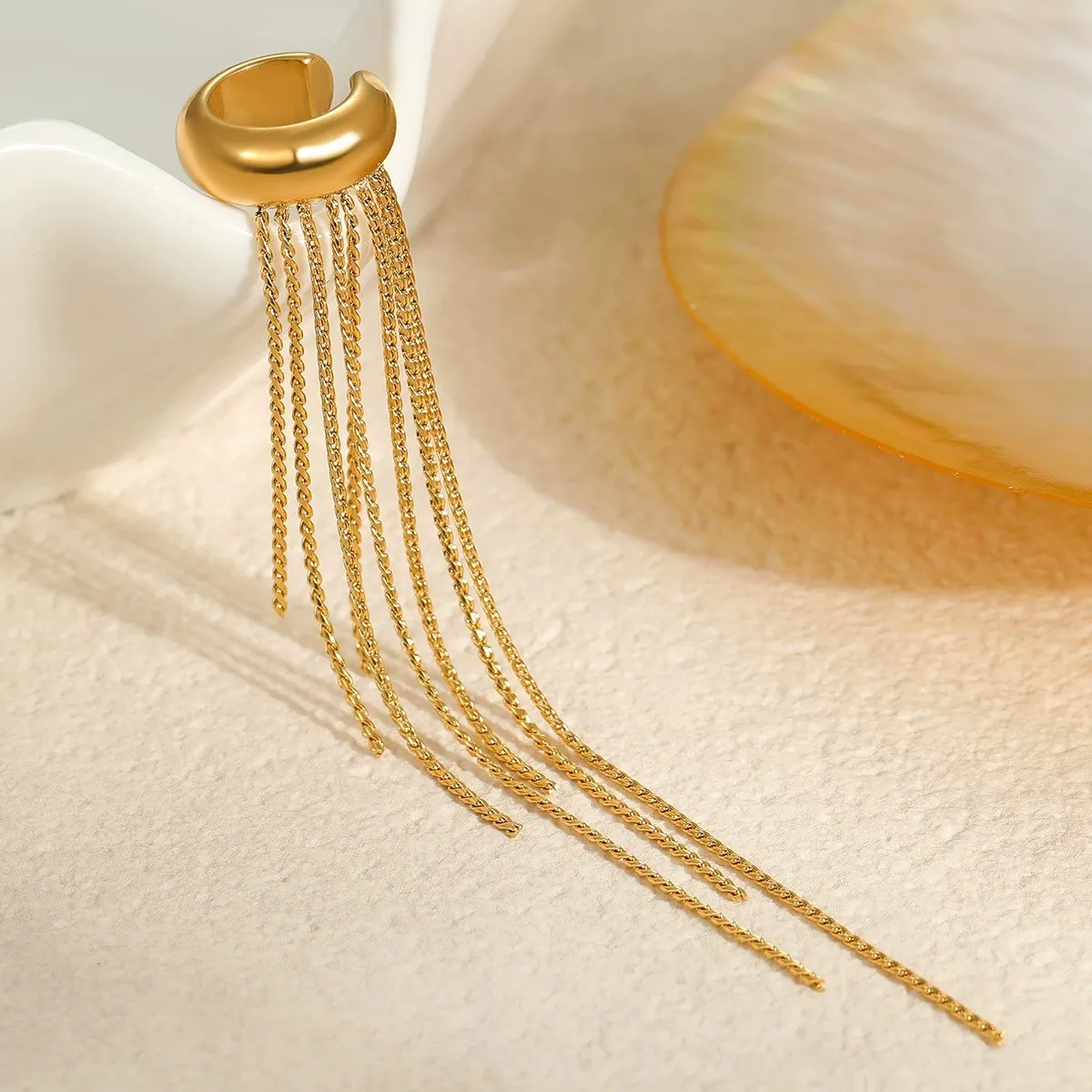
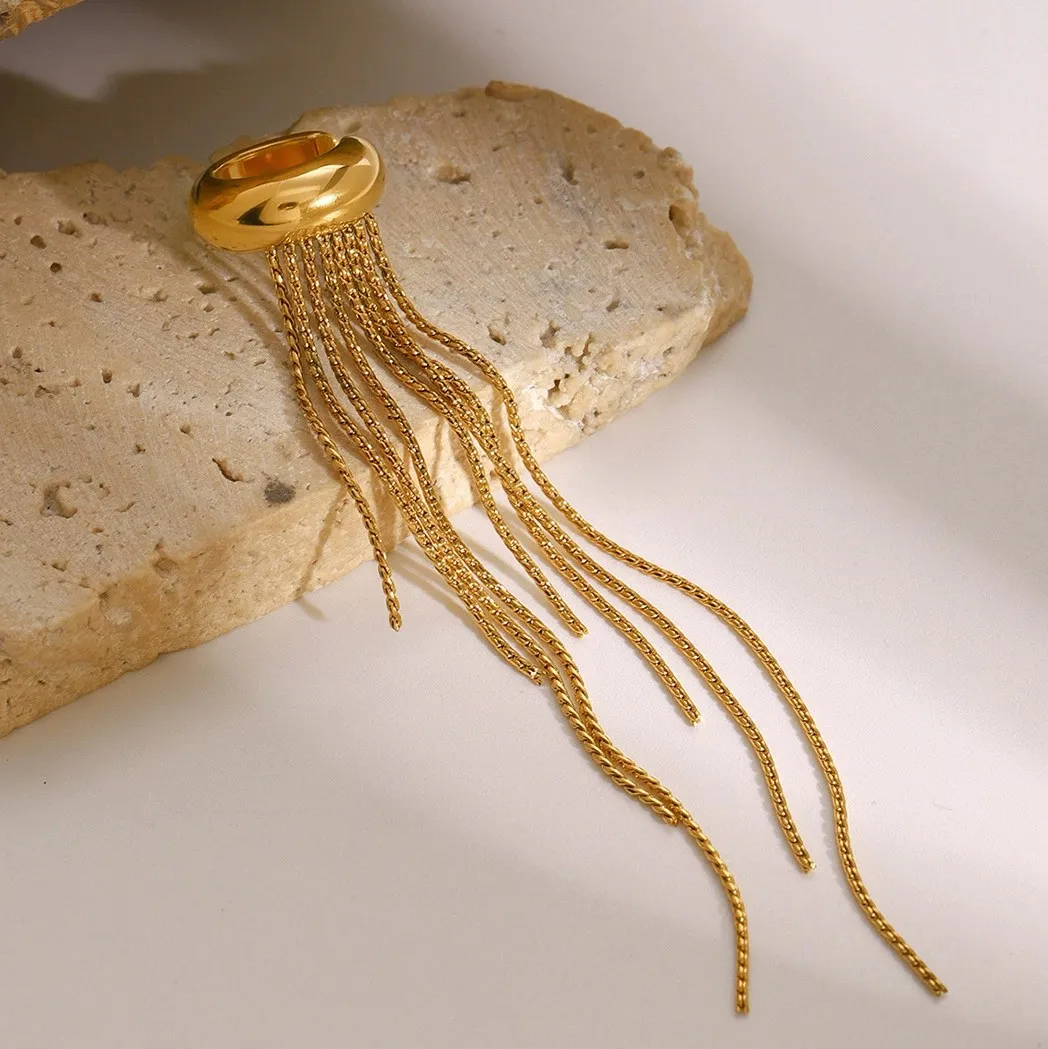
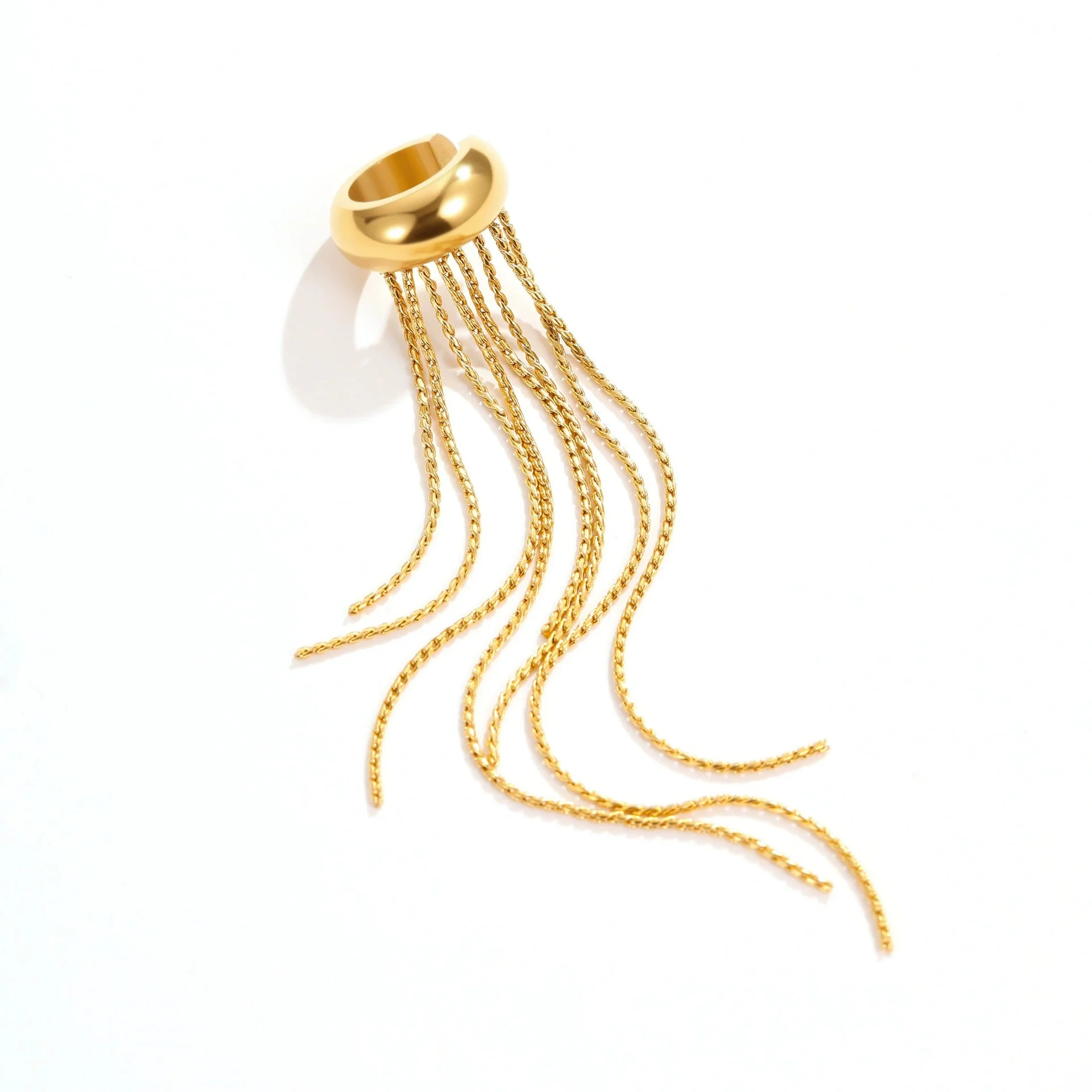
Relia product 21853 is described as a non-piercing chain cuff, with the option combination Gold / Hip Hop. The table identifies Cuff Earrings, stainless steel, 18K Gold Plated and a tassel pattern. Those details provide a starting point for a cuff-specific enquiry, but they do not supply the opening, contact dimensions or adjustment instructions.
Ask which part contacts the ear and which distance the supplier uses to describe the usable opening. If adjustability matters, ask whether adjustment is intended for this item and what product-specific guidance applies. Do not promise that the cuff fits every ear or that repeated bending is an approved way to change the fit.
A selected cuff can also have several visible curves. Make the requested measurement location explicit with a reference view or a clear verbal description. “Opening at the contact element” is a different question from the maximum outside width of the whole ornament. If the contact area has more than one relevant dimension, request those separately.
Fit information to request
Usable opening, contact-area dimensions and any confirmed adjustment guidance for the selected cuff.
Claims to avoid
Universal fit, guaranteed comfort, child suitability or an assumed safe adjustment range without product-specific support.
For a long-chain cuff, define the drop and the connections
Long is a style description rather than a measurement. For product 21853, ask for the hanging drop of Gold / Hip Hop and specify the reference point you want used. A measurement from the top of the contact element can differ from the length of an individual hanging chain. Both can be useful if they are labeled accurately.
Ask how the hanging elements connect to the cuff and whether the complete supplied configuration matches the chosen reference. This is a construction question, not permission to assume the chain is detachable or that an extra earring is included. If multiple hanging elements are present in the selection, the supplier should identify which length each measurement describes.
For merchandising, an overall drop may help your team assess how the ornament occupies a product card or display. For specification work, a chain length alone may still leave the contact element and connection spacing undefined. Keep those goals separate so a useful display measurement is not mistaken for a complete fit specification.
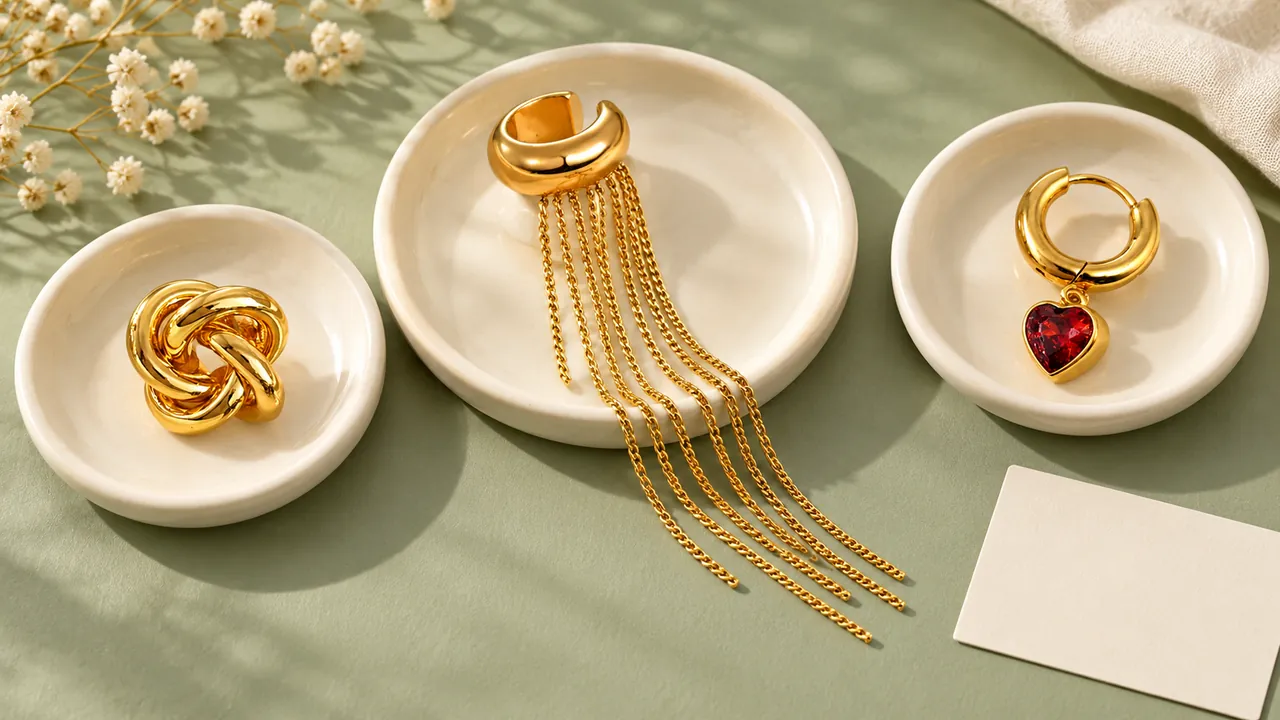
Do not estimate dimensions by scaling a lifestyle photograph against a person's ear. Perspective and image presentation can make that comparison unreliable for procurement. Ask for the actual selected-item measurements and retain the supplier's marked reference with the agreed specification.
Compare the requests without forcing unlike forms into one size cell
| Selected reference | Known catalog direction | Measurement request |
|---|---|---|
| 21850, 0.79'' * 0.71'' / Classic / Gold | A two-value size label and a stud-style title | Identify the measured face or outline, then confirm post, projection and closure information separately. |
| 21853, Gold / Hip Hop | Non-piercing chain-cuff description | Confirm opening, contact area, hanging drop and connection details for that selection. |
| 21641, Gold | Table says Stud Earrings; title includes other form words | Confirm the actual fastening before choosing a stud or hoop measurement list. |
A comparison sheet can include blank fields where a measurement is not applicable. That is better than forcing every item into a generic length, width and weight pattern. A blank marked “not applicable to confirmed construction” means something different from a blank marked “answer requested.” Use those labels so the team can see which gaps still block a decision.
If units differ between references, ask for a consistent quotation specification or make any internal conversion clearly labeled. Preserve the original reported value alongside the working value. Rounding should not create an apparent manufacturing tolerance, because a converted display figure is not an agreed acceptance range.
Send a request that can be answered against one selected item
A clear stud enquiry could read: “For product 21850, 0.79'' * 0.71'' / Classic / Silver, please identify what the size values measure, provide the relevant projection and post information, and confirm the supplied closure and quantity basis.” The wording keeps the exact selection intact without assigning dimensions to parts that the listing has not identified.
For the cuff, write: “For product 21853, Gold / Hip Hop, please confirm the usable cuff opening, contact-area measurements and overall hanging drop. Please identify the measurement reference points and any adjustment guidance applying to this selected item.” The questions are different because the wearing construction is different.
Before the enquiry leaves your team
- Match the product, option and chosen view.
- Name the part or space each requested measurement describes.
- Keep fastening and supplied contents separate from decorative dimensions.
- Leave unconfirmed mechanisms and fit claims out of customer-facing copy.
- Retain the answered measurement reference with the final specification.
See the jewelry measurement guide for organizing fit questions, and the fastening and specification checks for the supporting details. You can ask about an earring option with the product reference and the measurements needed for your buying decision.
Send the Selected Earring and Fit Questions