01 / 11 · Relia Jewelry
Moving an Approved Sample into First Production
Once you approve a jewelry sample, the first bulk order should reproduce that chosen version rather than reopen every design choice. We recommend fixing the photographed appearance, exact option, fit and supplied contents together, then using that configuration as the order reference.
This matters when a range has six ring designs or several chain profiles. A sample that looks right does not identify every neighboring option. Select the version you intend to sell before extending quantities across colors, sizes or styles.
- One approved version
- Record the open ring's exact numbered design rather than just Gold ring.
- Fixed order choices
- Keep chain profile and length together; fixed-size rings need their selected size label.
- First-production baseline
- Attach the accepted sample reference to the agreed configuration and supplied contents.
02 / 11 · Buyer guide
Turning a Selected Relia Design Into an Order
Relia · In-house jewelry manufacturing in Qingdao, China
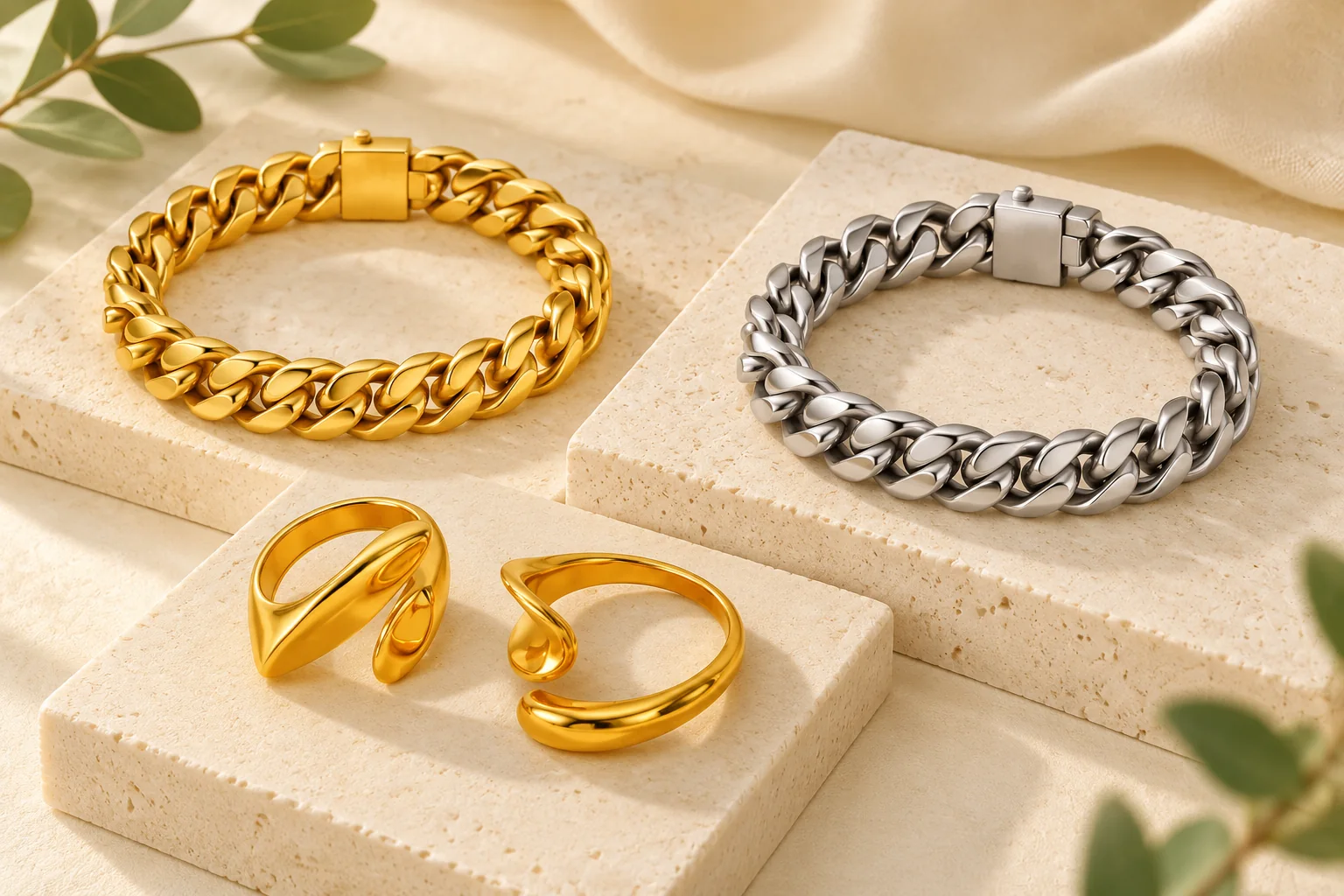
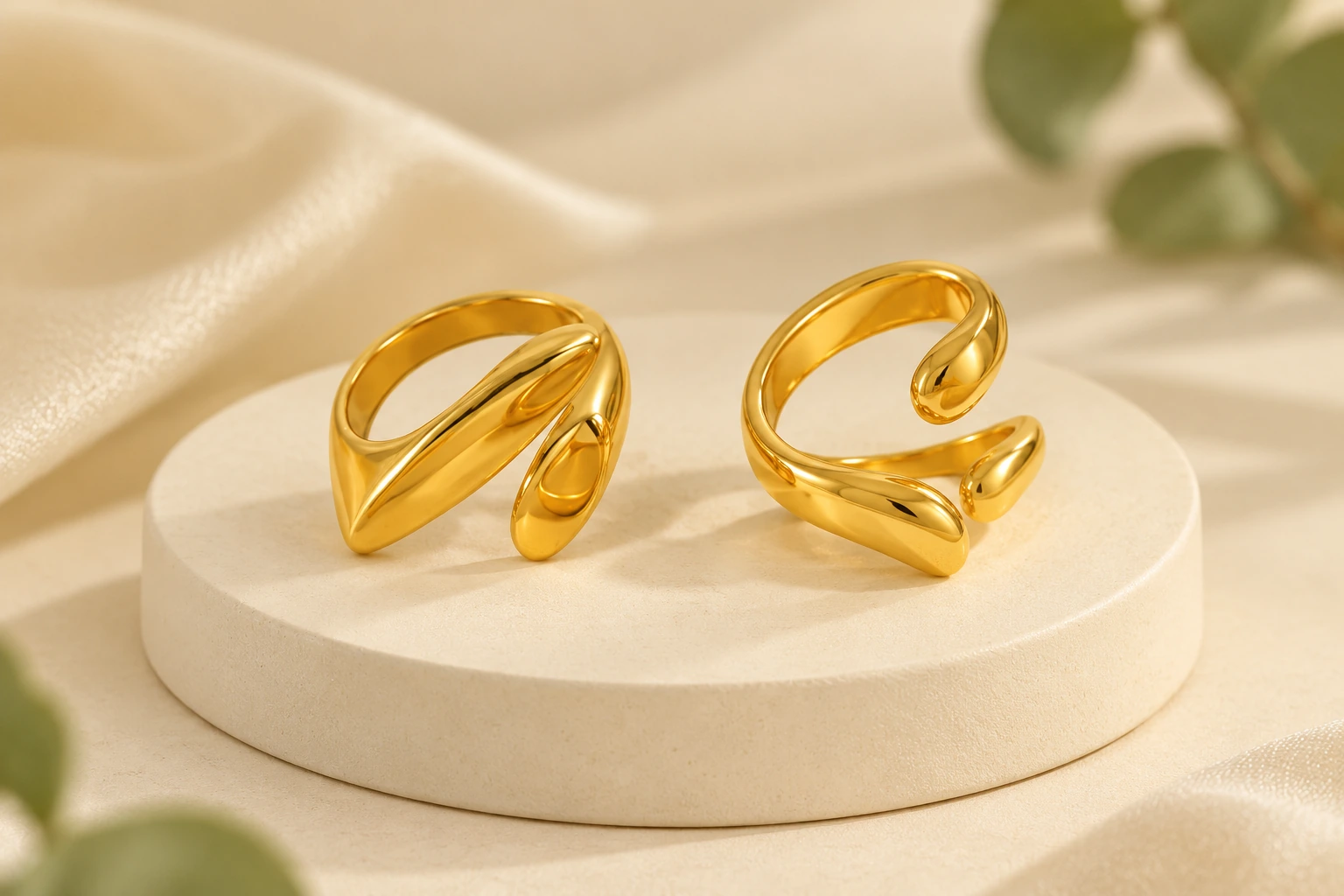
Relia's existing ranges provide concrete configurations for this first production discussion. Our Gold open rings have six numbered designs; the knot/link rings combine two patterns, two colors and size labels 7–10. Flat chains separate profile, color and necklace length rather than forming one generic option.
For a brand moving beyond samples, these choices give us a shared reference as a Qingdao jewelry factory. You can tie quantities to the approved versions and distinguish requested changes from the baseline. This is an order-planning approach, not a claim that a particular inspection plan or tolerance is already included.
Freeze the Full Version Rather than the Product Name
- Open ringGold, Resizable, selected #1–#6 · Six shapes are distinct
- Flat chainColor, 2–5mm label, length · Profile and length vary independently
- Sized bandDesign, color, size · A sample size does not define the run
- Accepted sampleDate and agreed revision · Separates approval from earlier proposals
03 / 11 · Buyer guide
Translate the Approved Shape Into Defined Production Features
At Relia, forming a repeatable product begins with a defined shape, not only a front photograph. Chain length follows the completed path between its ends; ring fit depends on the inside profile; an earring combines a decorative body with separate wearing hardware. Those features respond to different component dimensions, so one generic size field cannot describe the first production order.
The flat-chain range offers 16, 18, 20 and 24 inches with separate 2–5mm profile labels. Keep their measurement axes explicit. For a Link or Weaving Knot band, retain the chosen sizing convention and inner measurement; for an open ring, define the selected opening. Relia's forming work gives each version its geometry. A defined finished dimension and an agreed comparison method let your sample and production brief refer to the same feature.
Translate the Approved Shape Into Defined Production Features
| Construction | Feature created by geometry | First-order reference |
|---|---|---|
| Chain | Finished path and profile axis | Selected inch length and millimeter label |
| Sized band | Inside profile and band section | Agreed size convention and inner measurement |
| Open ring | Opening and curved body | Selected sample and intended fit scope |
| Earring | Body, post and closure positions | Named wearing components and dimensions |
04 / 11 · Buyer guide
Approve the Finished Appearance as an Assembly
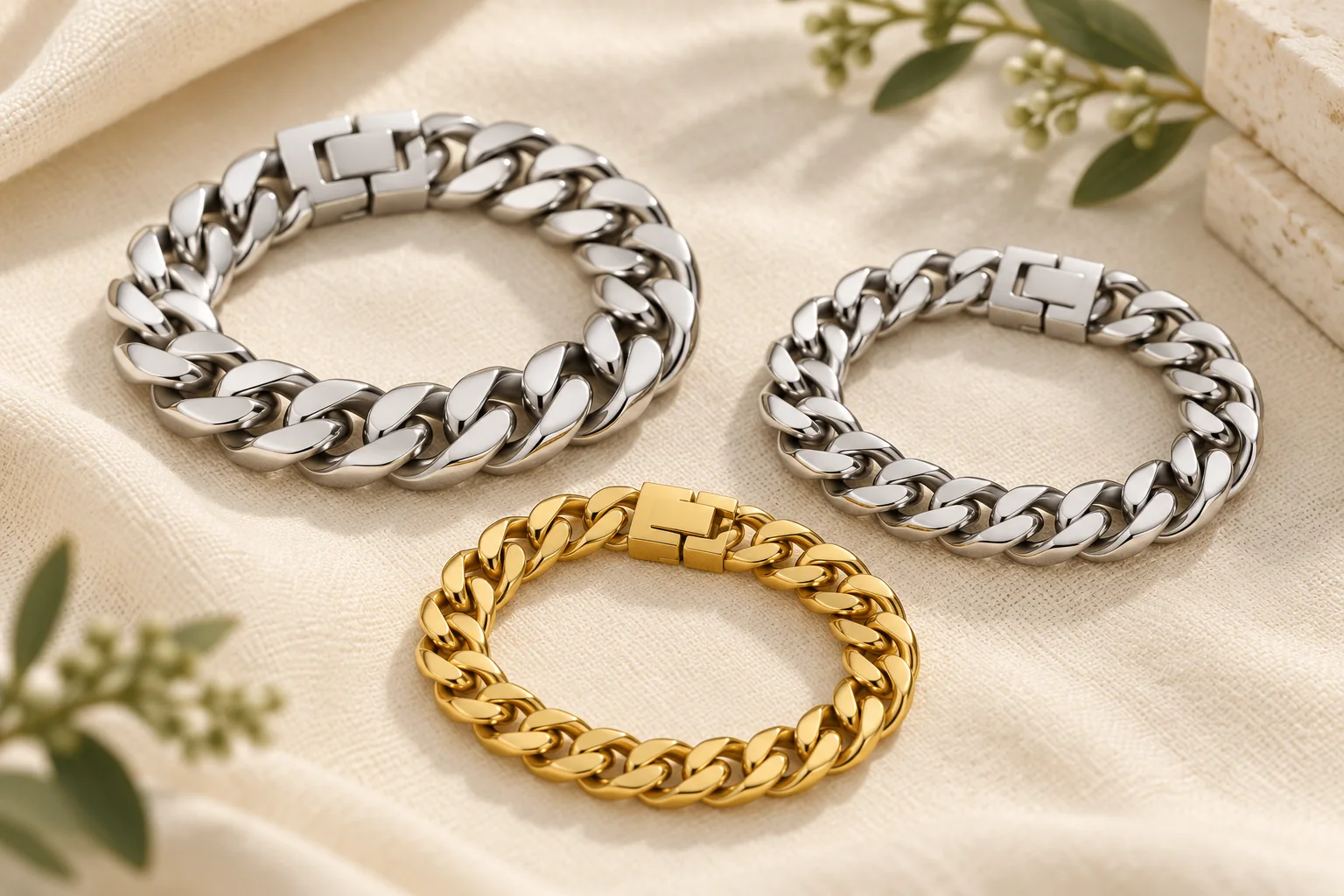
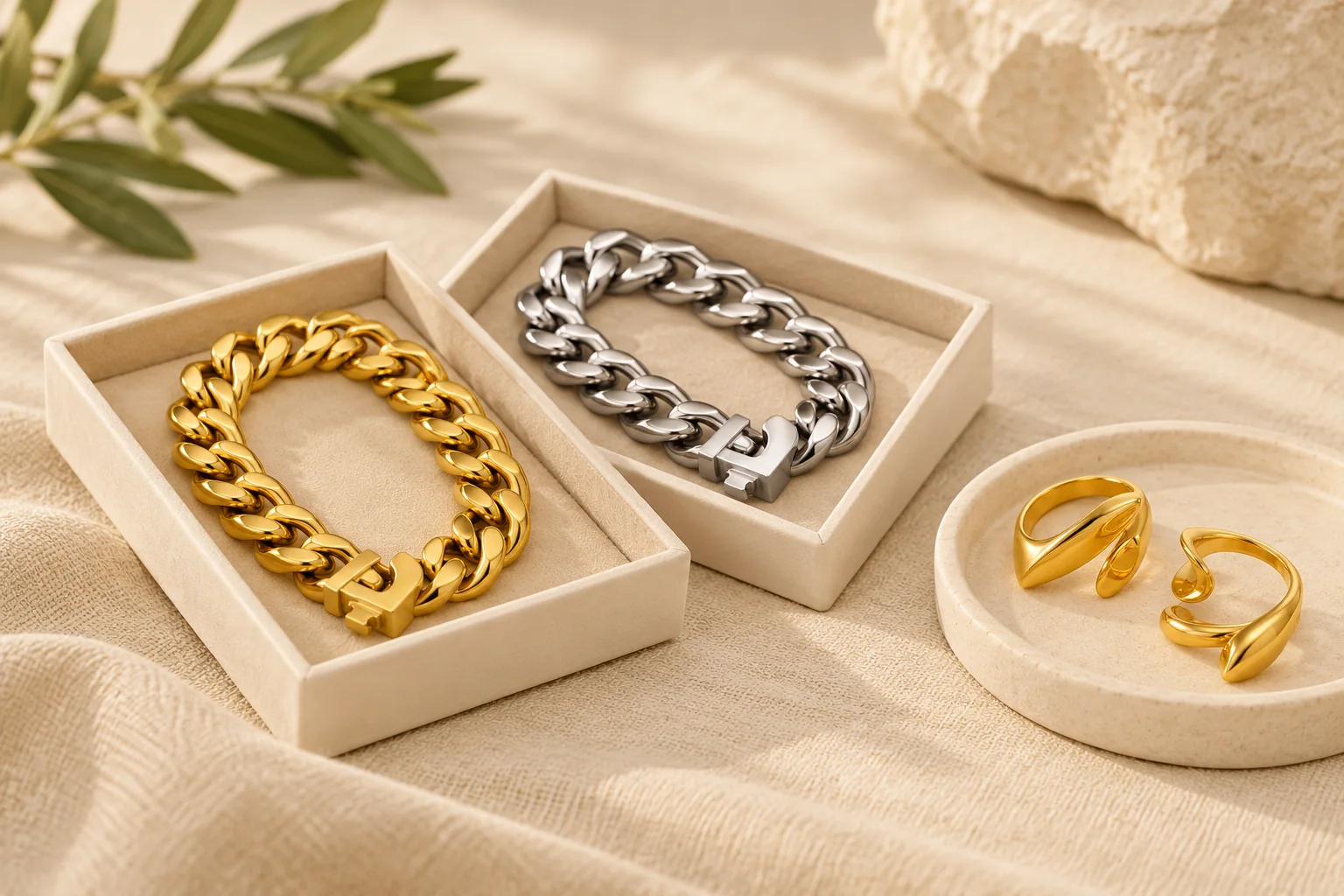
The pictured Cuban bracelets make the complete assembly clear: link profile, end fittings and clasp belong to the selected version together. For this polished steel range, keep the chosen metal color, millimeter profile and wrist length with the accepted sample. A plated piece should be reviewed assembled rather than as a loose metal part.
Other constructions need different observations. The heart earrings, for example, combine steel, zircon and claw-setting detail; their appearance depends on those parts together. Use the same viewing arrangement for sample and later production comparison, and distinguish finish, shape and component changes without assigning a cause prematurely. A new stone arrangement remains a specification change even when the overall color stays Gold.
05 / 11 · Buyer guide
Turn Defects into Observable Descriptions
Useful acceptance language identifies an observable condition and its location. A clasp that does not close, a missing decorative component and a scratch on the front face are different findings. They should not be compressed into a single vague category such as bad quality.
For the first order, agree the characteristics that matter to your product and the way disputed findings will be reviewed. Use photographs and the accepted sample to define appearance boundaries where practical. Avoid inventing numerical tolerances just to make the form look complete; dimensions and limits need to reflect the actual selected design.
Turn Defects into Observable Descriptions
- ClosureDoes not engage or operate as intended · Selected hardware and demonstration
- DecorationMissing or displaced component · Location beside sample image
- Visible surfaceUnwanted mark in the agreed view · Image under comparable light
- FitMeasurement outside the agreed specification · Method and measured result
06 / 11 · Buyer guide
Separate Sample Approval from Lot Acceptance
A sample demonstrates the version you accepted. A production-lot decision concerns the goods made for the order. These are different approvals, so the first one should not be used as a substitute for the second.
NIST explains acceptance sampling as using a randomly selected sample to support a decision about accepting or rejecting a lot. It does not certify every piece or establish a supplier-wide quality system. If your order uses sampling, agree the plan and response to findings explicitly. We do not assign an unstated sampling level or claim that a particular inspection has already been performed.
Further reading: NIST acceptance sampling.
07 / 11 · Buyer guide
Keep Packing Decisions in the Production Version
Packing can change how the product reaches your receiving team. A ring design mixed into another inner group, or an earring pair described as a single piece, can make an otherwise correct product difficult to receive and sell. Keep the selling unit explicit.
The proposed packing list should identify each exact variant and quantity. Retail presentation, inner grouping and carton totals should remain separate fields. An accepted jewelry sample does not automatically approve a printed card or a box, so presentation work needs its own agreed reference when it is part of the order.
Keep Packing Decisions in the Production Version
- Selling unitPiece, pair or specified combination · Jewelry contents
- Variant labelComplete design/color/size · Order identification
- PresentationAgreed card, bag or box · Artwork and fit
- Carton recordLine quantities and totals · Receiving reconciliation
08 / 11 · Buyer guide
Use a Change Register After Approval
After you approve the sample, any proposed material, finish, stone, dimension or hardware change should be visible in the order record. A substitute that looks similar may still change the product you intend to describe and sell. Keep unchanged features fixed while reviewing the proposed difference.
This is especially important when you add a color or size that was not represented by the approved sample. A new option can reuse the design direction without silently inheriting every physical approval. The useful decision is whether the additional version needs a specific comparison before it joins the first order.
Use a Change Register After Approval
- Additional colorAccepted finish direction · Identical appearance across options
- Different sizeAgreed fit convention · One sample approves every size
- New clasp or stoneAccepted construction · Visual similarity means equivalence
- Packing revisionAccepted selling unit · Jewelry approval covers print work
09 / 11 · Buyer guide
Release Only the Agreed First-Order Scope
A first production release should identify the quantities and versions you have actually accepted. Keep exploratory samples outside that list. If a revised pendant is still under discussion, it should not appear as an approved production line simply because the rest of the range is ready.
The practical benefit is clarity: the order can distinguish accepted specifications, requested changes and items not included. Commercial terms, delivery arrangements and any inspection requirement should be attached to that same scope. This makes the first production decision concrete without relying on a broad statement that the collection is approved.
10 / 11 · Buyer guide
Bring the Sample Reference and Final Order Together
Send the accepted sample reference, complete variants, agreed measurements and target quantities. Add the intended selling unit, presentation requirements and your proposed acceptance arrangements. We can discuss the first production order against that defined version and the applicable commercial terms.
For the open ring, keep the chosen design number. For the flat chain, keep color, millimeter label and length together. For the sized band, keep pattern, color and size together. Those small distinctions are the bridge between a sample you like and an order that describes what you intend to receive.
Bring the Sample Reference and Final Order Together
- Accepted versionSample and exact options · Defines the product
- Order linesQuantity per variant · Defines the scope
- Acceptance arrangementsAgreed review and response · Defines the lot decision
- Commercial termsConfirmed separately · Defines the order agreement
11 / 11 · Buyer guide
Connect Your Sample and First Order
Include the sample reference, accepted options and quantities for the first production enquiry. Describe any change since the sample was selected so Relia can discuss the same intended version.
Contact Relia by email, WhatsApp or phone. Our company is Qingdao Relia jewelry Co., Ltd., with its company address at Shuyuan Road, Qingdao, Shandong, China.
Contact Relia
- Email[email protected]
- WhatsApp14042030971
- Phone+86 18561762631