01 / 10 · Wholesale jewelry
Selecting PVD-Finished Steel Jewelry
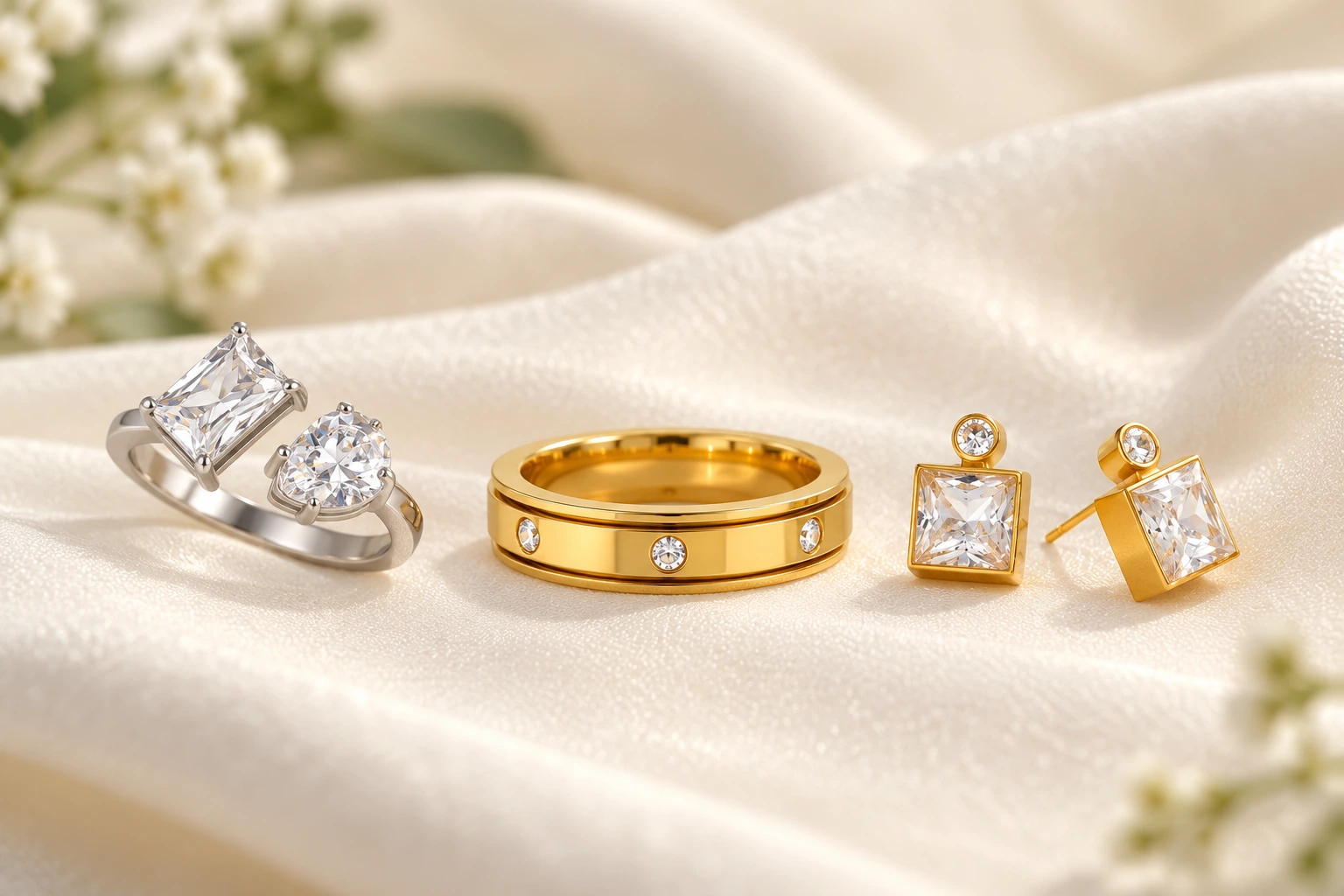
We are a jewelry factory in Qingdao, China. For PVD-finished jewelry, start with the product you need to sell, then specify the selected surface. PVD is a coating direction, not a substitute for ring fit, stone layout or earring hardware. We recommend comparing the complete construction rather than choosing only from a gold-colored image.
Our geometric ring range, spinner bands and clear geometric studs offer three different routes. A static decorative ring, a rotating band and an earring each introduce different design decisions, even when they share stainless steel and PVD wording.
02 / 10 · Buyer guide
Understand the Surface Layer Without Overstating It
The British Stainless Steel Association describes PVD as depositing a very thin ceramic layer, allowing the underlying surface texture to remain visible. That general mechanism helps explain why base finish and texture still matter to the final appearance. It does not identify the complete coating stack of every jewelry product.
For your selected piece, keep process direction, color and any numerical thickness as separate fields. Do not use a generic PVD description to invent a wear lifetime, gold content or corrosion rating. The useful specification is the actual product's agreed surface construction.
Further reading: BSSA coloured stainless finishes.
Understand the Surface Layer Without Overstating It
- PVDdirectionSurface-deposition route · A universal service lifetime
- ColorSelected visual appearance · Complete coating chemistry
- Base textureUnderlying surface character · A measured finish grade without data
- ThicknessA product-specific value when supplied · Every other item in the collection
03 / 10 · Buyer guide
Compare the Actual Design Menus
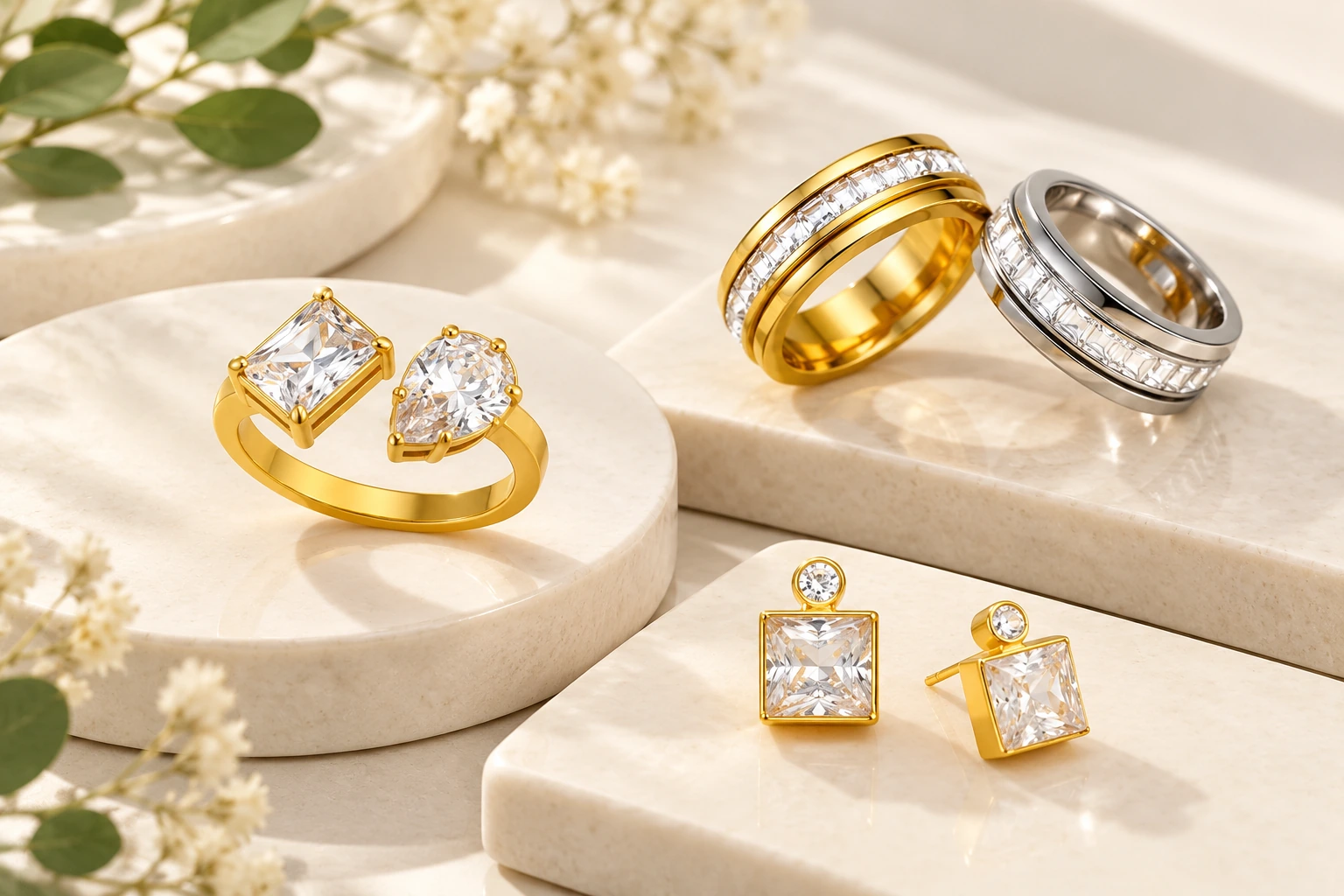
The geometric ring range has Gold Star, Gold Water Drop and Gold Geometric choices with steel, zircon and bezel-setting directions. The spinner range has six color/style labels across sizes 7–12. The stud range has Gold 1, Gold 2 and Gold 3 with a geometric clear-stone direction.
Choose the static ring for its shape, the spinner for its rotating construction, or studs for an earring line. These ranges have very different option complexity. A PVD capsule can be coherent through appearance while still keeping ring fit, moving parts and ear-contact hardware as separate decisions.
Compare the Actual Design Menus
- Geometric ringThree Gold design names · Shape and fit
- Spinner bandSix style labels × sizes7–12 · Rotation,style and size
- Geometric studsGold1–3 · Exact face and wearing hardware
- Shared PVDdirectionProduct-specific finish · Keep selected surface scope
04 / 10 · Buyer guide
Use the Spinner Thickness Only for That Range
The spinner description states 0.3μm plating thickness alongside PVD and gold-plated directions. That is a useful product-specific figure; it should not be copied onto the geometric rings or studs, whose descriptions do not supply the same numerical thickness.
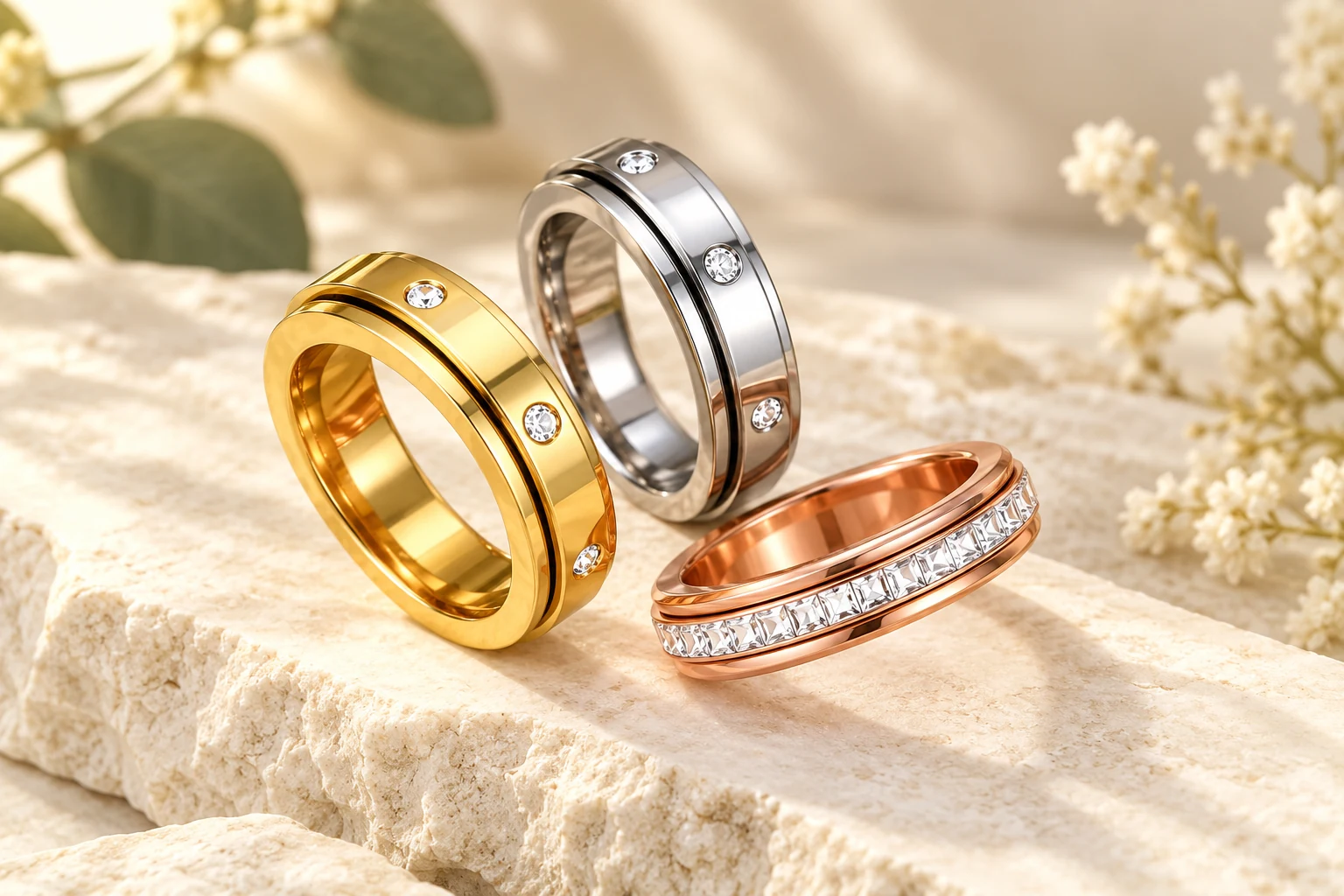
The spinner also lists several general finish terms, while its actual choices include Gold, Silver, Rose Gold and numbered alternatives. Keep the chosen style attached to the selected surface specification. A shared product-level value does not by itself resolve every coating detail for every color, so a precise finish requirement should name the actual version.
05 / 10 · Buyer guide
Review Moving and Static Constructions Differently
The spinner's rotating band is a functional part of the design. Compare how the selected ring rotates, its band profile and fit. A static geometric ring instead places the emphasis on the stone arrangement and silhouette. The same front-view approval cannot cover both kinds of construction.
For a moving band, avoid building the product story around a health effect; the catalog supports a tactile rotating accessory. For a geometric ring, keep the selected shape and bezel-setting direction clear. These are practical design distinctions that matter more to the buyer than repeating PVD as a broad quality slogan.
Review Moving and Static Constructions Differently
- Spinner bandRotation and band dimensions · Tactile moving accessory
- Static geometric ringStone layout and profile · Decorative shape-led ring
- Stud earringsPost,closure and face dimensions · Selected earring design
- All selected piecesComplete surface appearance · Product-specific finish
06 / 10 · Buyer guide
Choose a Color Palette from Real Alternatives
The spinner offers Gold, Silver, Rose Gold and corresponding 1-suffixed choices. The geometric ring and stud menus use Gold names only. A three-color ring-and-earring collection is therefore not an actual menu shared by all three ranges.
Choose whether your capsule is Gold-led or whether the spinner carries a wider color offer on its own. That distinction can be useful commercially: the rotating ring can provide color breadth while the studs remain a focused companion. Keep the suffixes because they identify separate actual styles, not a second ring size.
07 / 10 · Buyer guide
Keep Stone and Report Claims Separate from PVD
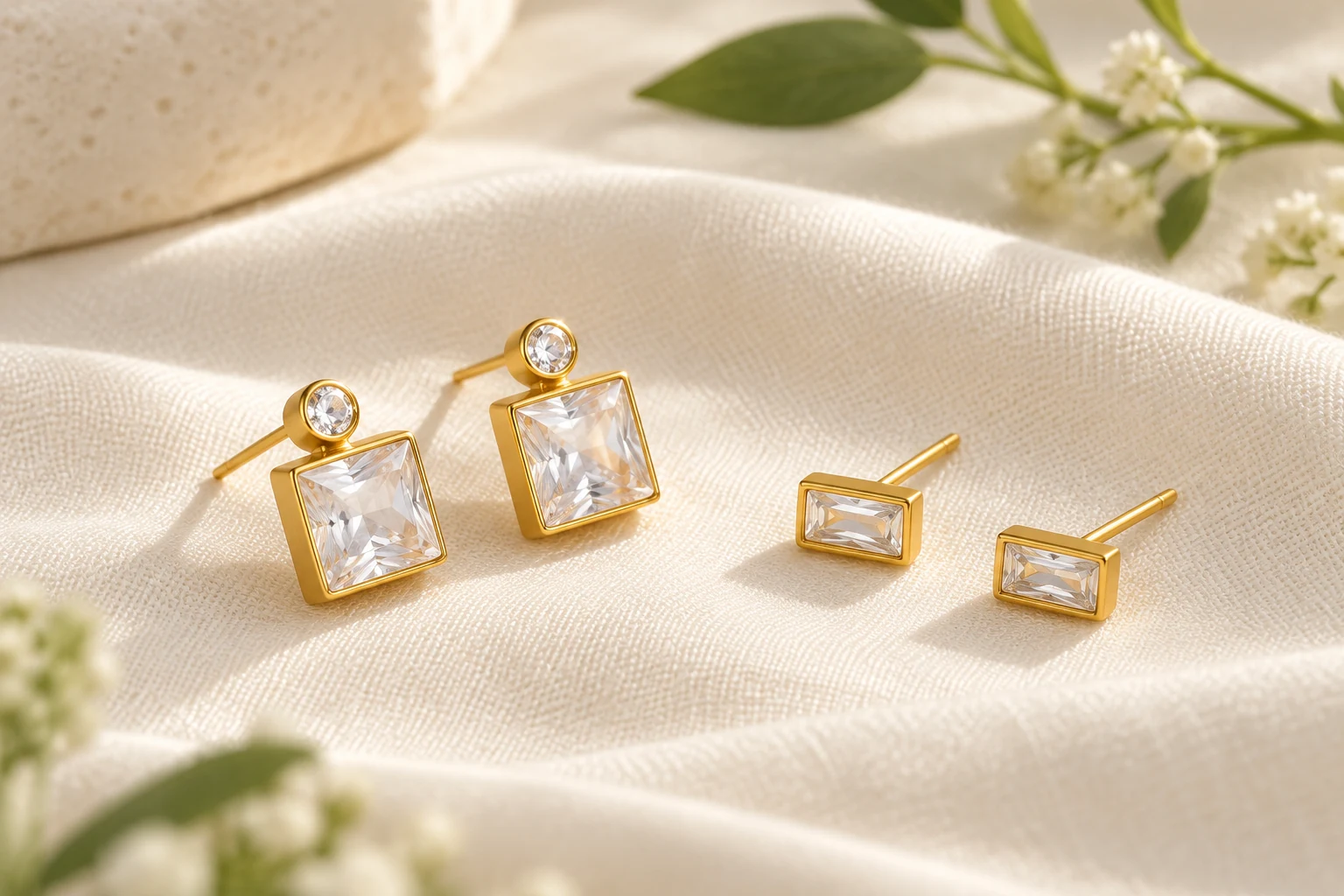
The geometric ring specifies zircon and bezel-setting direction. The stud range has a general Diamond field and an IGI certificate design label, but those labels are not an actual independent report for the selected studs. PVD describes neither the stone identity nor document coverage.
If a particular gemstone or report is essential, define that requirement for the exact Gold-numbered version. For a fashion design selection, you can evaluate the visible geometric arrangement without publishing an unverified diamond or certification claim. The surface finish and decorative-material evidence should remain separate.
Keep Stone and Report Claims Separate from PVD
- Geometric ring stoneZircon description · Keep actual selected identity
- Stud decorationClear geometric range · No report inferred from a label
- PVDsurfaceNamed finish direction · Not a gemstone certificate
- Requested reportSelected item correspondence · Actual document scope matters
08 / 10 · Buyer guide
Approve Appearance Under Comparable Viewing
PVD's thin-layer character makes the underlying surface relevant to appearance. For your sample review, compare the selected finish, texture and reflected color under similar lighting. A photograph can help retain the reference, but it should not be used to assign a numerical coating thickness.
For studs and geometric rings, review the face and side as well as the connecting hardware. For the spinner, include the moving construction. A coherent finish palette is an appearance decision; a specific abrasion, chemical or exposure requirement is a separate technical request with its own scope.
Approve Appearance Under Comparable Viewing
| Review layer | Useful comparison | Keep separate |
|---|---|---|
| Appearance | Color and texture in similar light | Coating thickness measurement |
| Geometry | Front and side of selected style | A shared PVDlabel |
| Operation | Spinner rotation or earring closure | Static face approval |
| Technical requirement | Defined use or evidence request | Unstated durability promise |
09 / 10 · Buyer guide
Keep Changes Attached to the Selected Surface
A different base texture, component or color can change the finished appearance even when the process direction stays PVD. Keep proposed revisions visible in the product record. A new color should not automatically inherit the accepted sample of another color, especially in a range with numbered alternatives.
For an existing-style order, retain the exact design, size and appearance label. For development, describe the intended surface and any component changes separately. This gives the finish discussion a concrete object without implying that every requested coating or color is already available on every design.
Keep Changes Attached to the Selected Surface
- New colorOriginal style and new appearance label · Compare selected surface
- New sizeSame style plus actual size · Check fit and profile
- New componentMaterial and surface request · Do not transfer prior scope blindly
- New textureIntended underlying appearance · Review complete finished look
10 / 10 · Buyer guide
Send a Product-Specific PVD Enquiry
Send the exact ring or stud version, size where offered and target quantity. Add the selected finish requirement and any relevant use conditions. If the spinner's stated 0.3μm value matters to the purchase, keep that request attached to the spinner rather than treating it as a collection-wide figure.
Choose a static ring for shape, a spinner for its moving construction or studs for an earring role. We can discuss the selected product and applicable sample or documentation arrangements. A useful PVD specification combines a real design, a clear surface and the wearing function you actually need.