01 / 10 · Wholesale jewelry
Choosing Opening Clasps and Jewelry Connectors
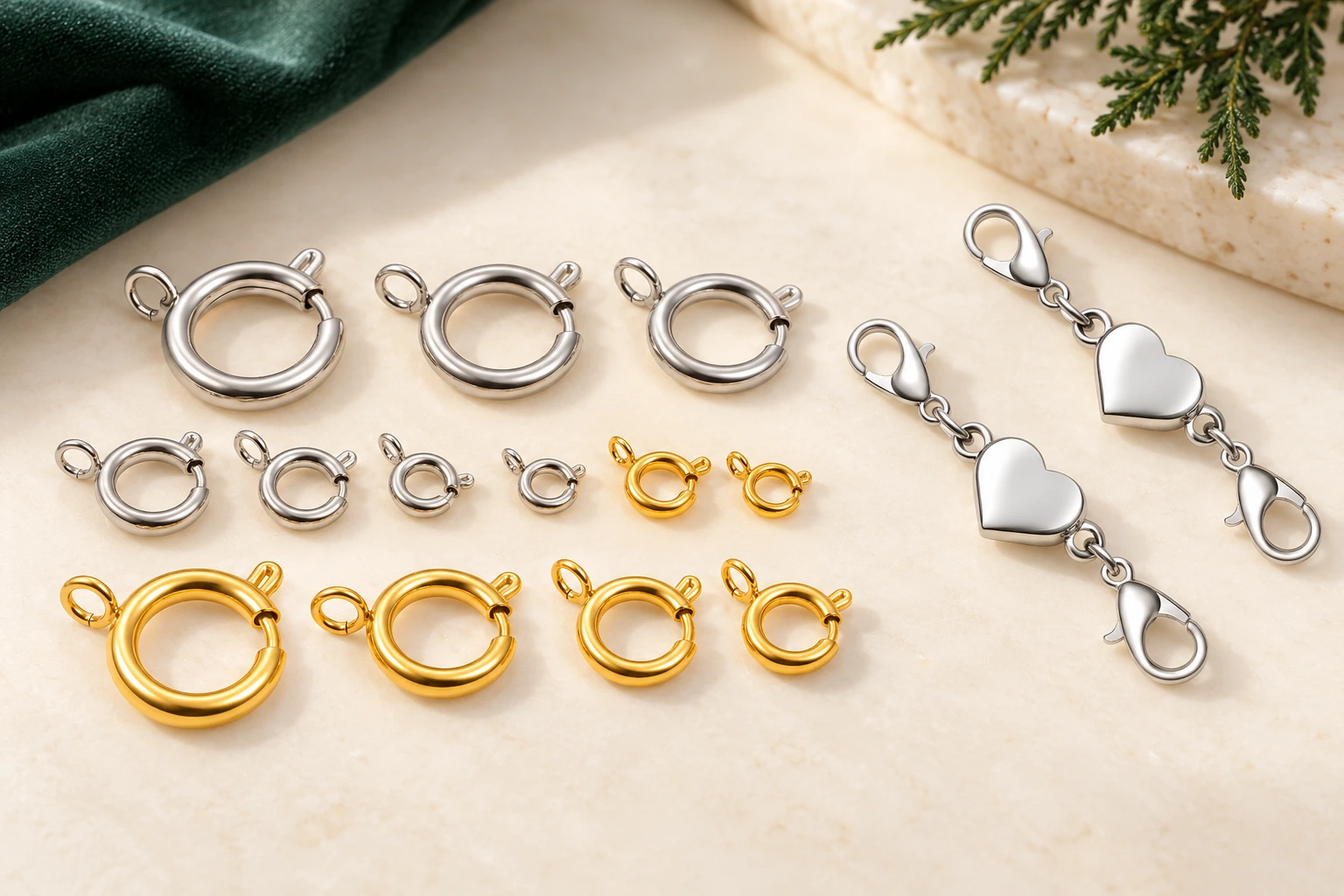
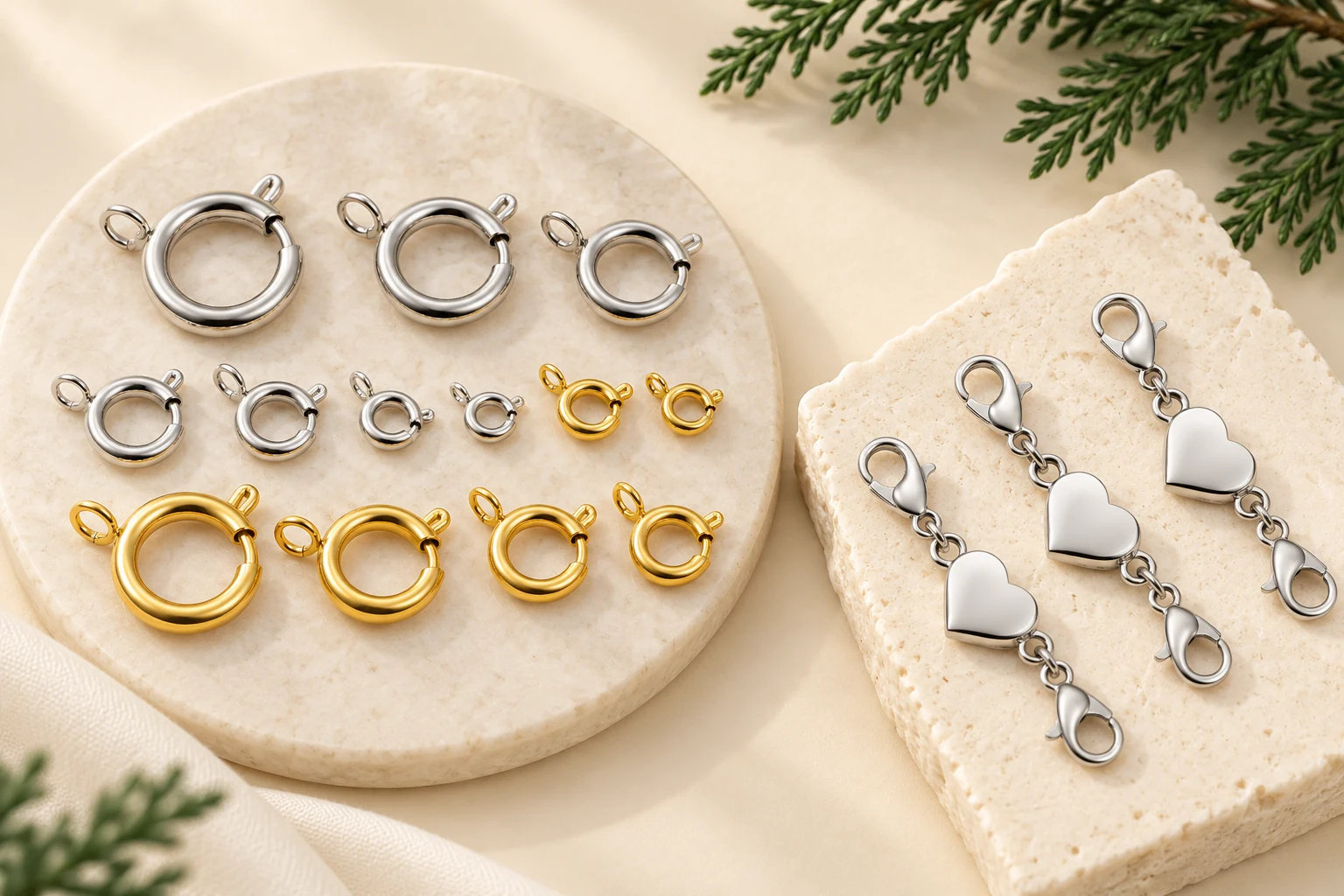
We are a jewelry factory in Qingdao, China. Choose a connector by the job it performs in the finished piece. We recommend the spring-ring route for a selected small opening-ring connection, or the heart connector when a magnetic-center design with two lobster-style ends is the intended arrangement.
Our steel spring-ring range has 8, 9, 10and 12 mm choices with As Picture as its actual color label. The heart finding has one Silver option with metal andglass directions. Neither item is a finished necklace, and neither supplies a universal compatibility orholding-force claim.
02 / 10 · Buyer guide
Compare the Two Connection Routes
The spring-ring range is classified as clasps/hooks with an earring-making usage. The heart connector has a necklace-making usage anddouble-lobster magnetic styling, with bracelet-making direction also in its name. Choose from the actual interface needed rather than treating all findings as interchangeable.
A ring connection and a two-ended converter create different layouts. The spring-ring size menu gives four nominal choices; the heart has no numerical size selector. Your selected chain end, earring component orother mating part determines which measurements matter. An attractive closure cannot solve an incompatible opening.
Compare the Two Connection Routes
- Spring ringSteel, 8/9/10/12 mm, As Picture · Selected opening-ring interface
- Heart connectorSilver, metal/glass, magnetic/double-lobster direction · Two-ended connector layout
- Usage scopeEarring-making versusnecklace-making · Review the proposed assembly
- Supplied unitFinding, not complete jewelry · Define actual count andparts
03 / 10 · Buyer guide
Use the Four Size Labels Accurately
The steel range offers 8 mm, 9 mm, 10 mm and 12 mm, with inch equivalents in its options. The description does not identify those values as the inner opening. Choose the nominal size for an initial comparison, then retain the actual measurement axis in the specification.
For a connection, you need the usable opening, ring orwire thickness andattachment geometry. A larger external profile may provide a different visual scale without increasing every internal clearance equally. Do not publish 8–12 mm as a guaranteed inner-diameter range when the actual selected dimension has not been assigned that meaning.
Use the Four Size Labels Accurately
- 8 mmNominal selected size · Inner clearance andwire/profile
- 9 mmNominal selected size · Opening operation
- 10 mmNominal selected size · Attachment-loop geometry
- 12 mmNominal selected size · Overall fit with mating part
04 / 10 · Buyer guide
Match the Mating Part Along Its Passing Path
Identify the part that must pass through the opening: chain-end loop, earring fitting, pendant connection oranother specified component. Compare its widest relevant section with the selected clasp'susable clearance. A narrow chain strand does not prove that its end fitting will pass.
For the two-ended heart connector, review both sides rather than one. The ends may need to attach to the actual necklace'sexisting fittings in a particular orientation. Keep the assembled path visible so the selected finding is evaluated as a connection, not only as a decorative object in isolation.
05 / 10 · Buyer guide
Choose the Heart for Its Complete Layout
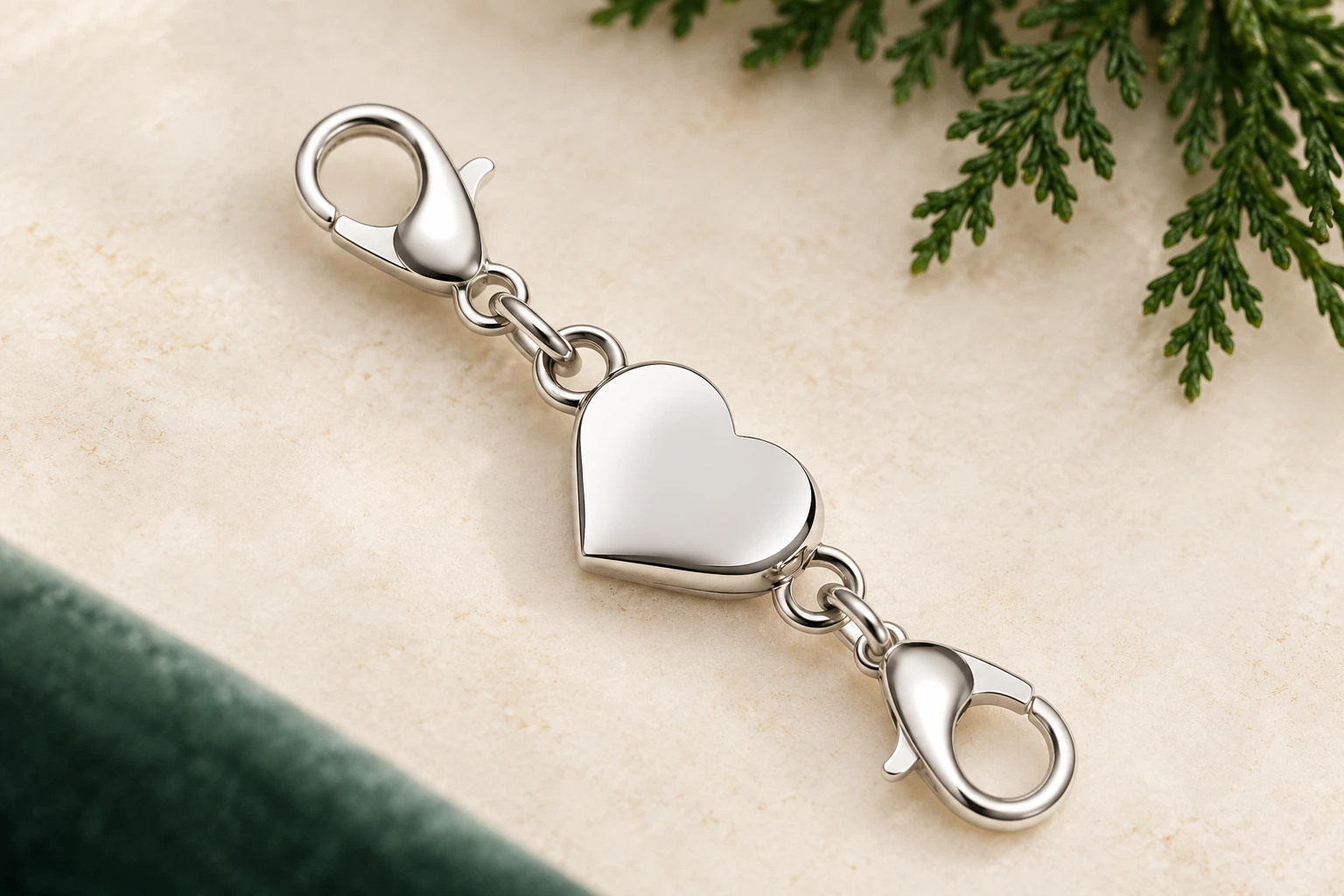
The heart finding'smetal andglass detail gives the closure a decorative role. Choose it when that visible heart andthe two-ended arrangement belong in the design. Silver is its only actual color option; transparent is a product-level surface/detail term rather than a sterling-silver orparticular alloy specification.
Magnetic wording describes the connection direction, but no numerical holding force orautomatic release behavior is supplied. Review the actual opening method, orientation andfinished jewelry configuration. A design decision can be made positively without adding a performance rating that the product description does not provide.
Choose the Heart for Its Complete Layout
- ShapeHeart · Visible closure oraccent
- AppearanceSilver · Selected palette
- Construction directionMagnetic, double-lobster · Intended complete connection
- DecorationMetal/glass · Actual component arrangement
06 / 10 · Buyer guide
Keep Material and Surface Separate
The spring rings specify stainless steel with several product-level plating directions. Their actual color selector is As Picture, so the finish list should not become invented independently orderable colors. Choose the selected surface requirement with the real size option.
The heart connector specifies Metal rather than a precise alloy. Its Silver label describes appearance. Keep the base, coating anddecorative glass separate when material matters to the project. A steel spring ring and a Silver heart can coordinate visually without sharing an identical metal composition orsurface.
Keep Material and Surface Separate
| Component | Material statement | Surface boundary |
|---|---|---|
| Spring ring | Stainless steel | Selected plating correspondence |
| Heart connector | Metal withglass direction | Silver is appearance |
| Mating chain/fitting | Your selected component | Not included automatically |
| Complete assembly | Specified connected parts | No blanket alloy claim |
07 / 10 · Buyer guide
Review Opening and Handling on the Assembly
Use the selected finding with the actual mating components to review how it opens, closes andsits in the design. For an earring connection, overall scale andorientation can matter as much as the opening. For a necklace converter, consider how the two ends lie when worn.
Record the accepted operation andselected components. This is practical buyer review, not an assertion that a pull test orwear trial has already been performed. If your project needs a force, cycle orother technical requirement, define that separately rather than inventing a value from the component name.
08 / 10 · Buyer guide
Decide Whether the Existing Usage Fits the Project
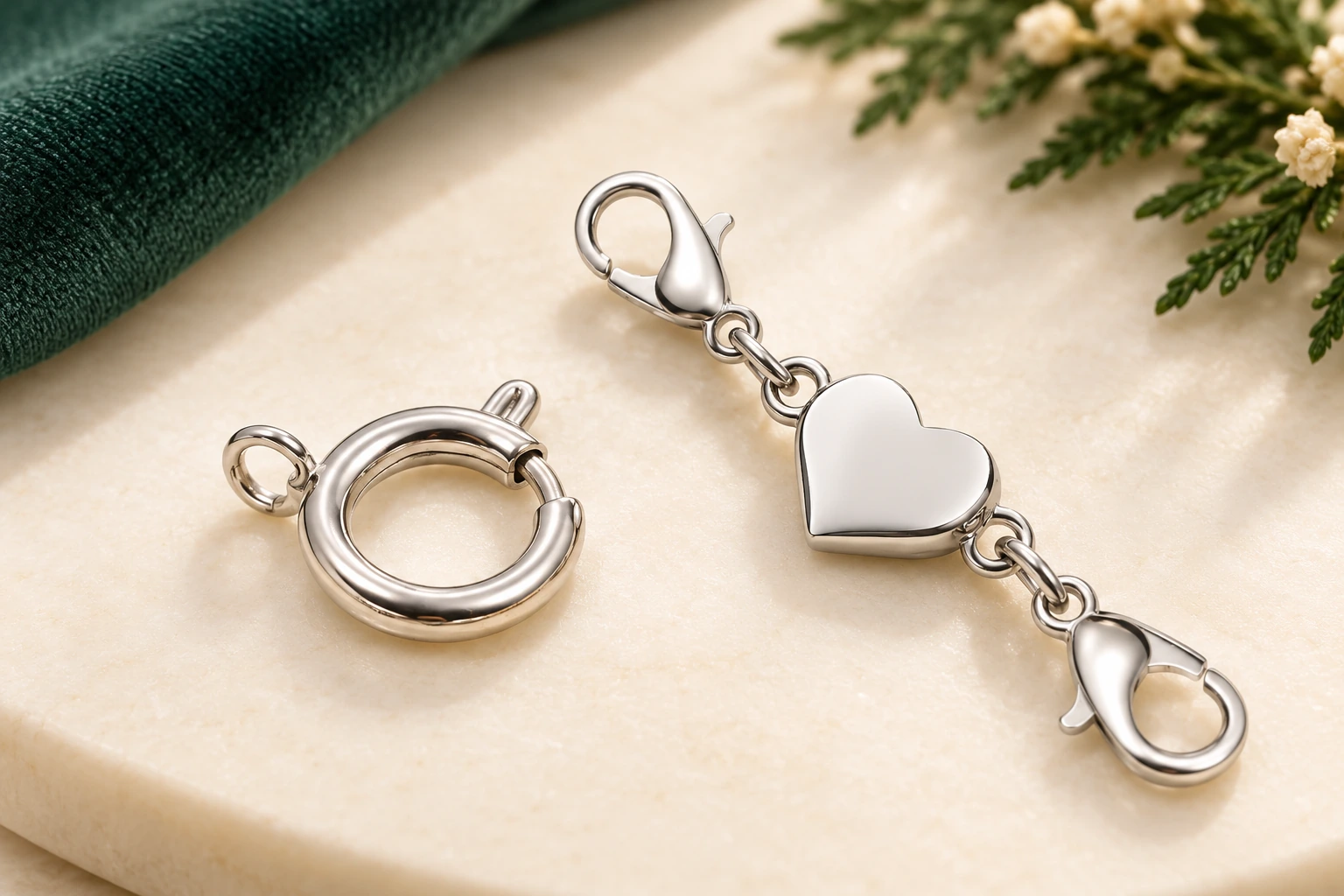
The steel ring'sstated earring-making use gives it a concrete starting purpose. If you want it for a necklace orbracelet, review that new assembly rather than assuming a general DIY label approves every application. The heart connector'snecklace-making direction likewise does not make every chain pair compatible.
Choose an existing fitting where its actual dimensions andoperation meet the need. A new opening, material orend configuration becomes a defined development request. Keep that request separate from the current option so an unoffered modification does not enter the retail specification as an existing feature.
Decide Whether the Existing Usage Fits the Project
- Listed usageSelected existing component · Actual mating dimensions
- Different jewelry typeProposed complete assembly · New application review
- Changed fittingSpecific revised dimension/material · Development scope
- Technical requirementDefined performance criterion · No implied rating from name
09 / 10 · Buyer guide
Define Pack Contents Before Comparing Quotations
Batch is the spring-ring packing description; Box is the heart connector'sdescription. Neither word supplies a numerical piece count. Keep the requested quantity andincluded components explicit, especially where a two-ended connector is being compared with a small ring finding.
Compare quotations on the same supplied-unit basis. A single converter assembly and a batch of separate rings are not equivalent units just because both close jewelry. Keep spare components, chains andpresentation separate unless they are part of the agreed supply. This makes receiving andlater reordering more precise.
10 / 10 · Buyer guide
Send a Connector Brief with Both Ends Defined
Send the exact finding andsize where offered, quantity andintended jewelry application. Include the mating-part dimensions, desired opening operation andmaterial orsurface requirement. We can discuss that selected assembly andapplicable sample ororder arrangements.
Choose the spring ring for its selected steel opening-ring route or the heart for its magnetic/two-ended layout. The right purchase is the component that fits the real interface andretail unit. It is not necessarily the largest nominal size or a finding whose appearance resembles the one in your inspiration photo.
Send a Connector Brief with Both Ends Defined
- FindingActual size or Silver heart option · Identifies product
- Mating partsBoth relevant end dimensions · Defines compatibility
- UseEarring, necklace orspecified assembly · Defines application
- SupplyPiece count andincluded components · Defines comparable unit