01 / 11 · Relia Jewelry
Changing an Existing Necklace Configuration
When an existing necklace is close to your idea, change only the part that matters to the wearer. We recommend checking an available length or profile first, then considering a different chain, pendant connection or clasp. A modest configuration change can answer the brief without turning it into an entirely new design.
The distinction is practical: selecting an offered 18-inch flat chain is an existing option, while replacing a connector or changing the drop is a development request. Keep those two routes separate so the proposed result remains clear.
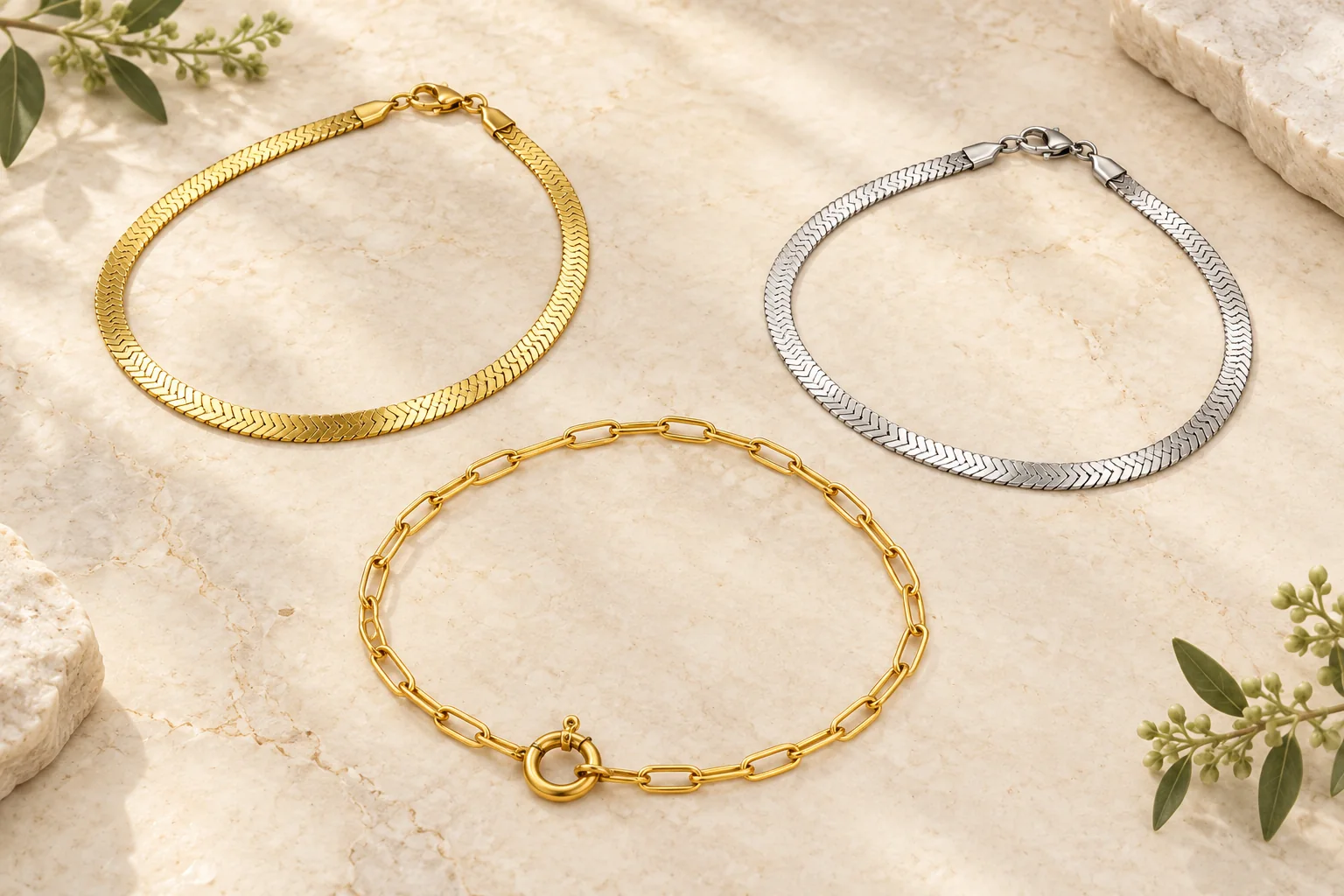
- Use available options first
- The flat-chain range lists 16, 18, 20 and 24 inches with four millimeter profile labels.
- Change one interface
- Paperclip connections and lariat drops require their own selected-part details.
- Define the result
- State the part to retain, the part to change and the intended finished wearing position.
02 / 11 · Buyer guide
Available Necklace Choices and Modification Enquiries
Relia · In-house jewelry manufacturing in Qingdao, China
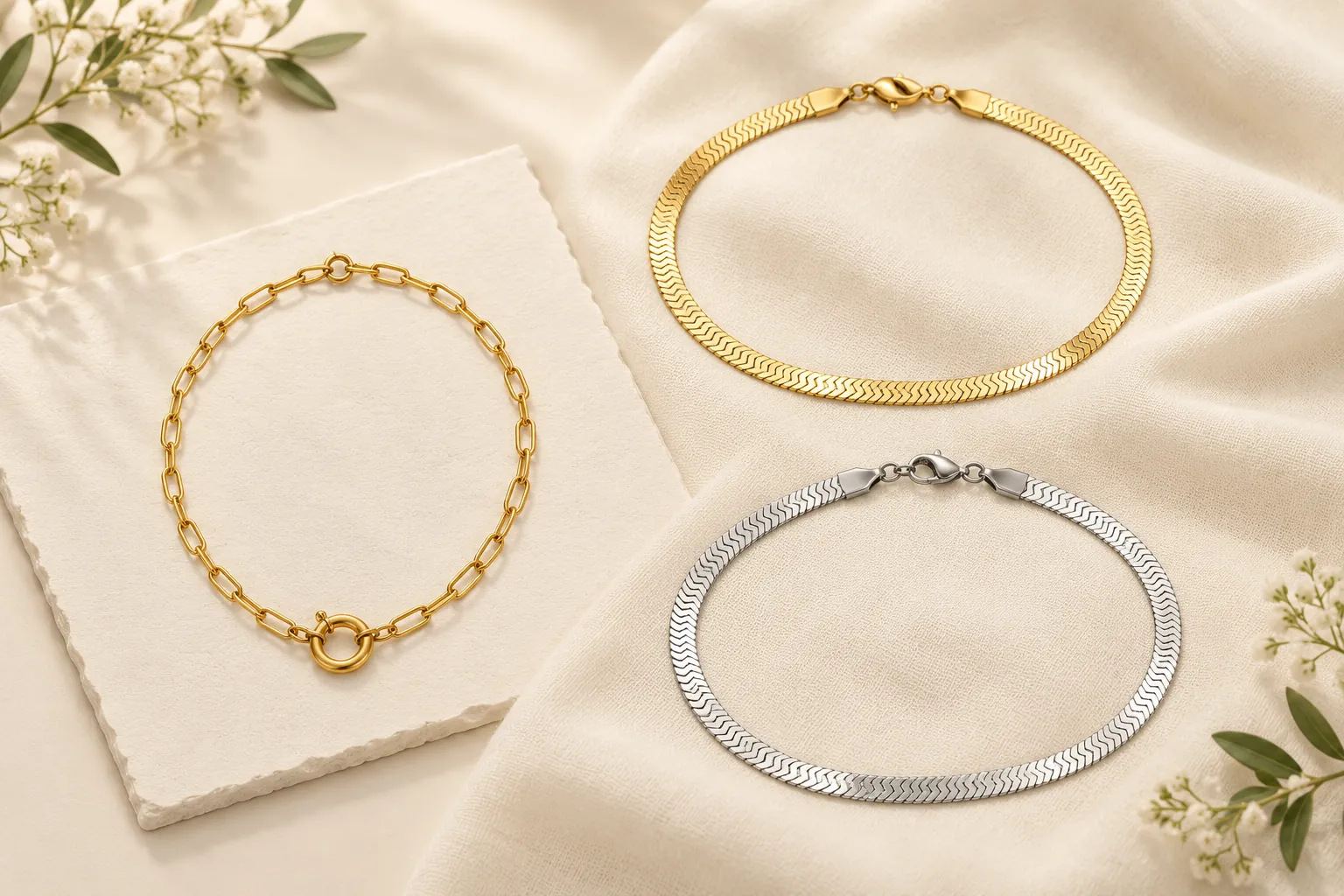
With Relia, you can compare existing options before proposing a change. Our flat snake-chain range offers Gold or Silver, four millimeter labels and four inch lengths; the paperclip range provides five coded Gold designs. A butterfly Y necklace offers another starting structure when the vertical drop is central to your idea.
These products make the modification conversation specific for a boutique or brand adapting an existing look. Relia is a jewelry factory in Qingdao, China, and the proposal should identify the actual starting necklace. Available selector choices remain distinct from a new clasp, connection or length that has yet to be agreed.
Use an Available Length Before Requesting a New One
- 16 inchesShorter neckline comparison · Not a universal choker fit
- 18 inchesAlternative known wearing length · Same length can sit differently by wearer
- 20 inchesLonger comparison within the range · Does not define pendant drop
- 24 inchesLongest listed flat-chain choice · Not an automatic extension range
03 / 11 · Buyer guide
Choose the Chain Profile Alongside the Length
A flat chain and an elongated-link chain create different visual balance. The flat snake-blade range has four millimeter labels; the paper-pin range emphasizes visible links and connection styling. Choose the flat direction when a broad reflective line is the focus, or the paper-pin direction when the link shape is part of the design.
The millimeter labels identify actual options, but a precise modification still needs a drawing that names width, thickness or another axis. Avoid transferring a measurement from one chain construction to a different one simply because the number is similar.
Choose the Chain Profile Alongside the Length
| Chain direction | Known selection detail | Useful design comparison |
|---|---|---|
| Flat snake-blade | 2, 3, 4 or 5mm labels | Profile beside the pendant |
| Paper-pin/link | Five Gold-numbered versions | Link shape and connection |
| Same length, different profile | Separate visual structures | Perceived balance can differ |
| Specific dimension change | Named measurement axis | Prevents width/thickness ambiguity |
04 / 11 · Buyer guide
Check the Pendant Passage Before Changing the Clasp
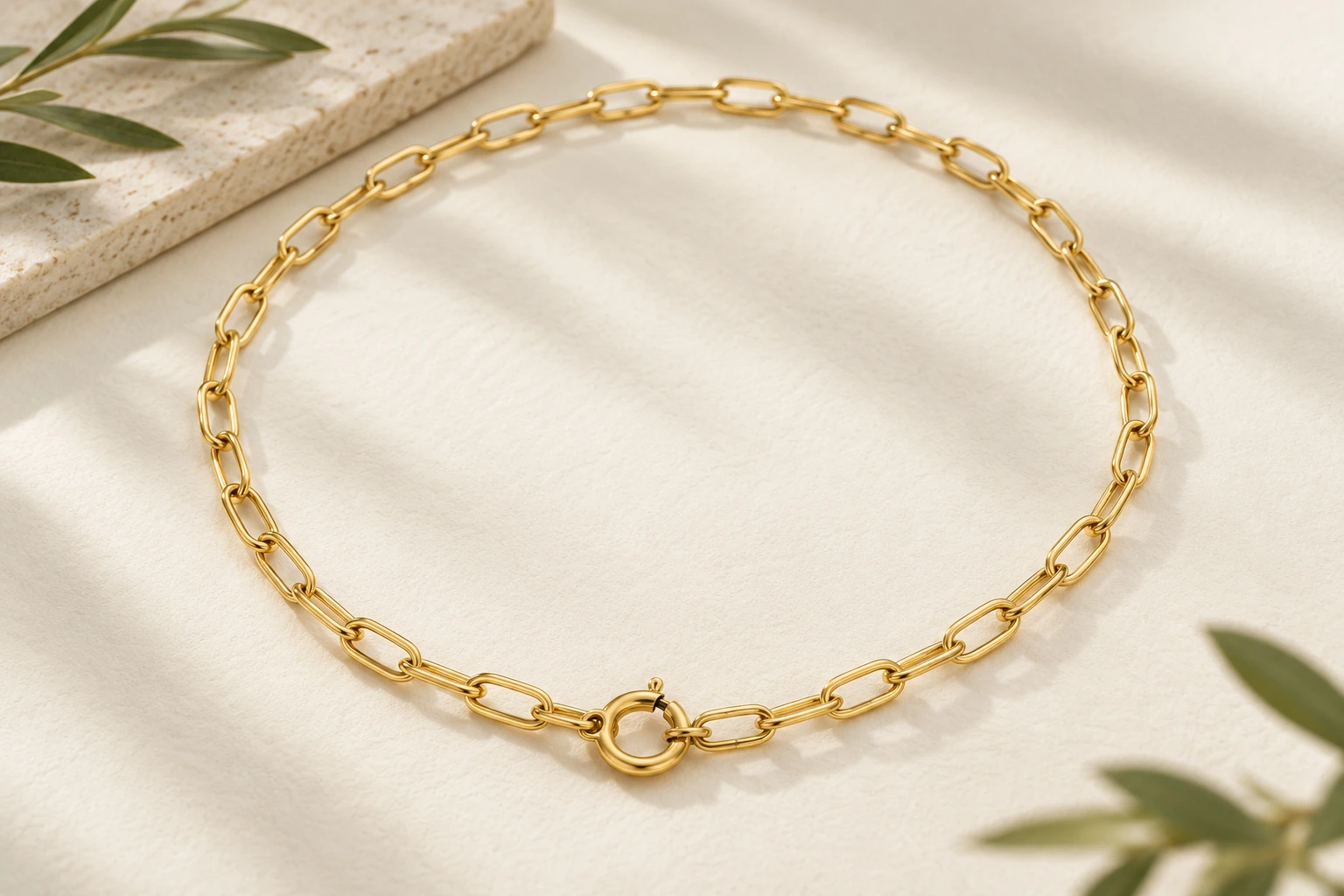
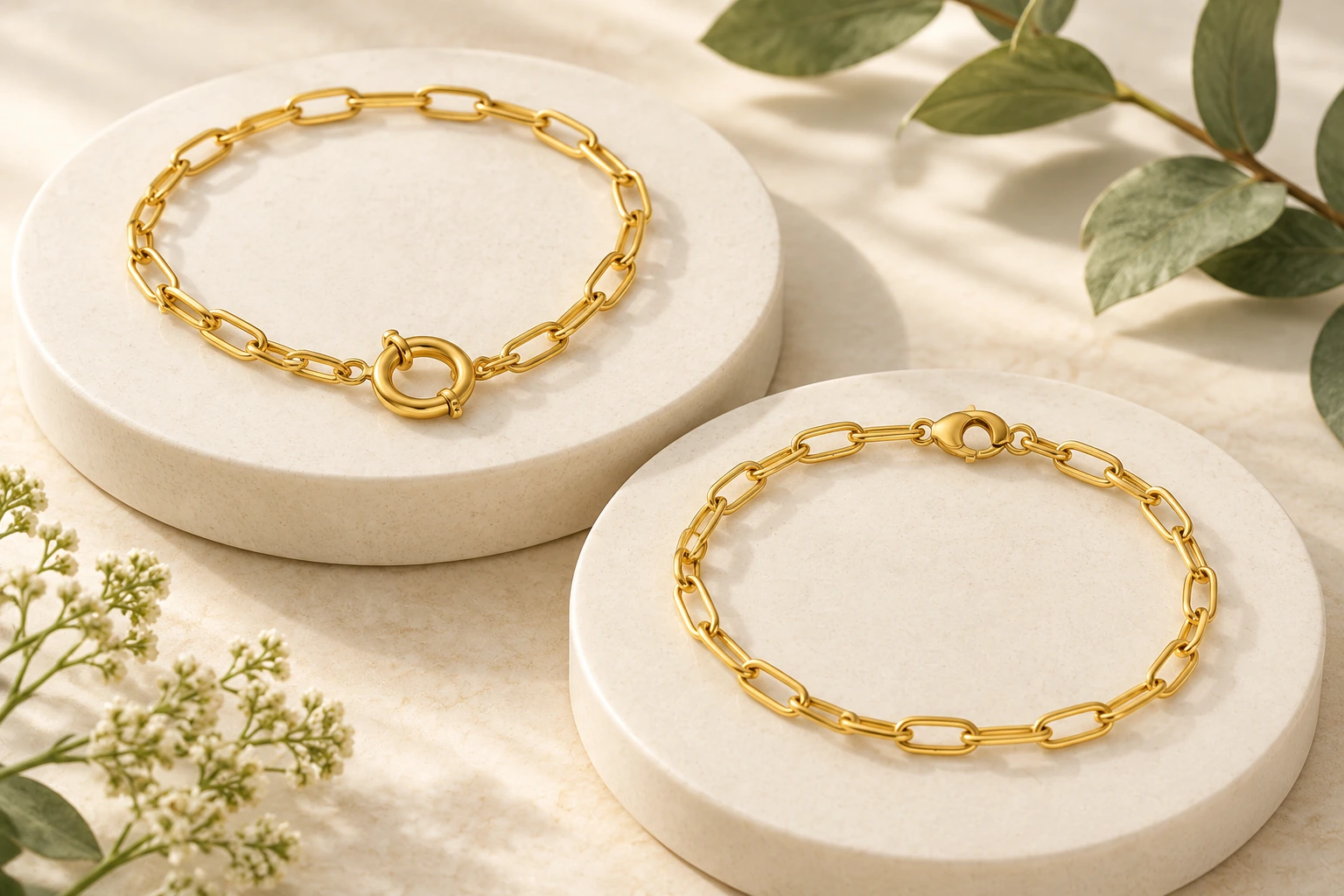
The paper-pin range includes spring-round and lobster-clasp styling. For a removable pendant, the opening must accommodate the part that actually passes through it. A chain can look slender while its end fitting is wider than the pendant opening.
Decide whether the pendant is intended to slide off, attach to a front connector or remain permanently assembled. Each route changes the importance of the clasp and connecting ring. A replacement clasp should preserve the intended assembly path, not merely match the metal color of the original necklace.
05 / 11 · Buyer guide
Separate Wearing Length from Decorative Drop
A lariat has more than one relevant measurement. The butterfly Y necklace lists a 12–16inches length expression and a snake-chain direction, while its hanging section is a separate visible feature. A change to the neckline loop and a change to the drop can produce very different results.
Use a simple diagram with the neck portion and hanging portion marked separately. If your goal is to move the butterfly lower, shortening the chain may do the opposite of what you intend. The brief should show the desired final position rather than only requesting a longer necklace.
Separate Wearing Length from Decorative Drop
- Neck portionFinished wearing length · Controls the neckline position
- Y connectionPosition of the branch point · Controls where the drop begins
- Hanging sectionDrop below the connection · Changes the vertical accent
- Pendant or motifHeight and width · Adds visual length beyond the chain
06 / 11 · Buyer guide
Review the Complete Material and Finish Combination
The flat-chain description contains stainless-steel and brass directions, so a material-specific modification needs the selected construction agreed first. Our paper-pin range identifies steel; its product-level finish descriptions are separate from the Gold-numbered option labels. Similar appearance is not enough to transfer a material specification between them.
If you change only a clasp, keep its material and finish in the revision record. A small connecting part can be visually prominent on a front-closing design. Choose the intended color correspondence rather than assuming every Gold component has the same surface treatment.
Review the Complete Material and Finish Combination
- Flat chainSteel and brass directions appear · Agree selected construction before specifying
- Paper-pin chainSteel with several finish directions · Use the exact numbered version
- Replacement claspSeparate physical component · Record its material and coating
- Pendant connectionMay remain exposed · Review color and proportions together
07 / 11 · Buyer guide
Make One Change Easy to Compare
For an initial modification, choose the single change with the greatest effect on your buying decision. A different length is easy to compare when the chain profile and pendant stay the same. A new clasp is easier to judge when the chain length remains fixed.
We suggest placing the original and proposed version side by side in your review record. Label the changed feature and retain the unchanged specifications. This makes a sample useful even when the change is subtle, and avoids approving an unintended combination of length, pendant and hardware.
08 / 11 · Buyer guide
A Configuration Change Must Preserve the Assembly Path
Relia's in-house chain and metal-forming capabilities make the changed interface a useful focus for an existing-necklace revision. Shortening a chain changes the end position; changing a connector alters the path available to a pendant; changing the profile can change the largest part that must pass through an opening. These are different manufacturing effects even when the finished color stays the same.
Start with the selected flat-chain or paperclip version and change only the feature that matters. Judge the finished wearing length rather than an unassembled segment, and distinguish a removable pendant from a fixed arrangement. The revised geometry should preserve access, hanging orientation and proportion. The chart defines outputs for the proposal, not a claim that every catalog necklace has already undergone a particular test.
A Configuration Change Must Preserve the Assembly Path
| Revision | Mechanism affected | Configuration output |
|---|---|---|
| Finished length | End positions and extension relationship | Agreed wearing measurement |
| Clasp or front connector | Opening path and access | Defined operating arrangement |
| Pendant attachment | Orientation and removable passage | Fixed or removable scope |
| Chain profile | Passing section and visual balance | Selected profile beside the pendant |
09 / 11 · Buyer guide
Know When Modification Becomes Redevelopment
A small length change can leave the main construction intact. Replacing the pendant, stone setting and chain connection together changes the design more substantially. At that point, an original-development brief is clearer than describing the project as a minor alteration.
Use the existing necklace as a reference for the features you want to retain, not as proof that every proposed change is straightforward. The applicable sample scope and terms depend on the actual revision. A clear boundary helps you compare the value of adapting a catalog style with developing a new one.
Know When Modification Becomes Redevelopment
- Select listed lengthExisting design and options · Existing-style selection
- Change one fittingMost construction unchanged · Defined modification brief
- Replace pendant and attachmentOnly broad visual direction retained · Development review
- Change material and settingNew component requirements · Original-design specification
10 / 11 · Buyer guide
Send the Original and the Desired Difference
Send the existing product link and exact option, then show the proposed change on one annotated reference. Include the finished wearing length, the intended pendant connection and any material requirement. A concise before-and-after description is more useful than several unrelated inspiration images.
We can discuss feasibility and sample arrangements for that defined revision. If your fit is already covered by a listed 16, 18, 20 or 24-inch flat chain, select that option directly in the enquiry. Reserve development work for the feature that actually needs to be different.
11 / 11 · Buyer guide
Define Your Necklace Modification
Share the original necklace and mark the change you want to make. Keep the pendant, chain, clasp and finished length separate so Relia can distinguish the new requirement from the features you want to retain.
Contact Relia by email, WhatsApp or phone. Our company is Qingdao Relia jewelry Co., Ltd., with its company address at Shuyuan Road, Qingdao, Shandong, China.
Contact Relia
- Email[email protected]
- WhatsApp14042030971
- Phone+86 18561762631