01 / 10 · Wholesale jewelry
Finished Chain and Pendant Bail Compatibility
For an existing pendant, choose the chain by its assembly path before judging the finished look. The pendant opening must accommodate every part that passes through it, including end fittings. We manufacture jewelry in Qingdao, China, and our existing steel and snake-chain directions provide concrete starting products for that comparison.
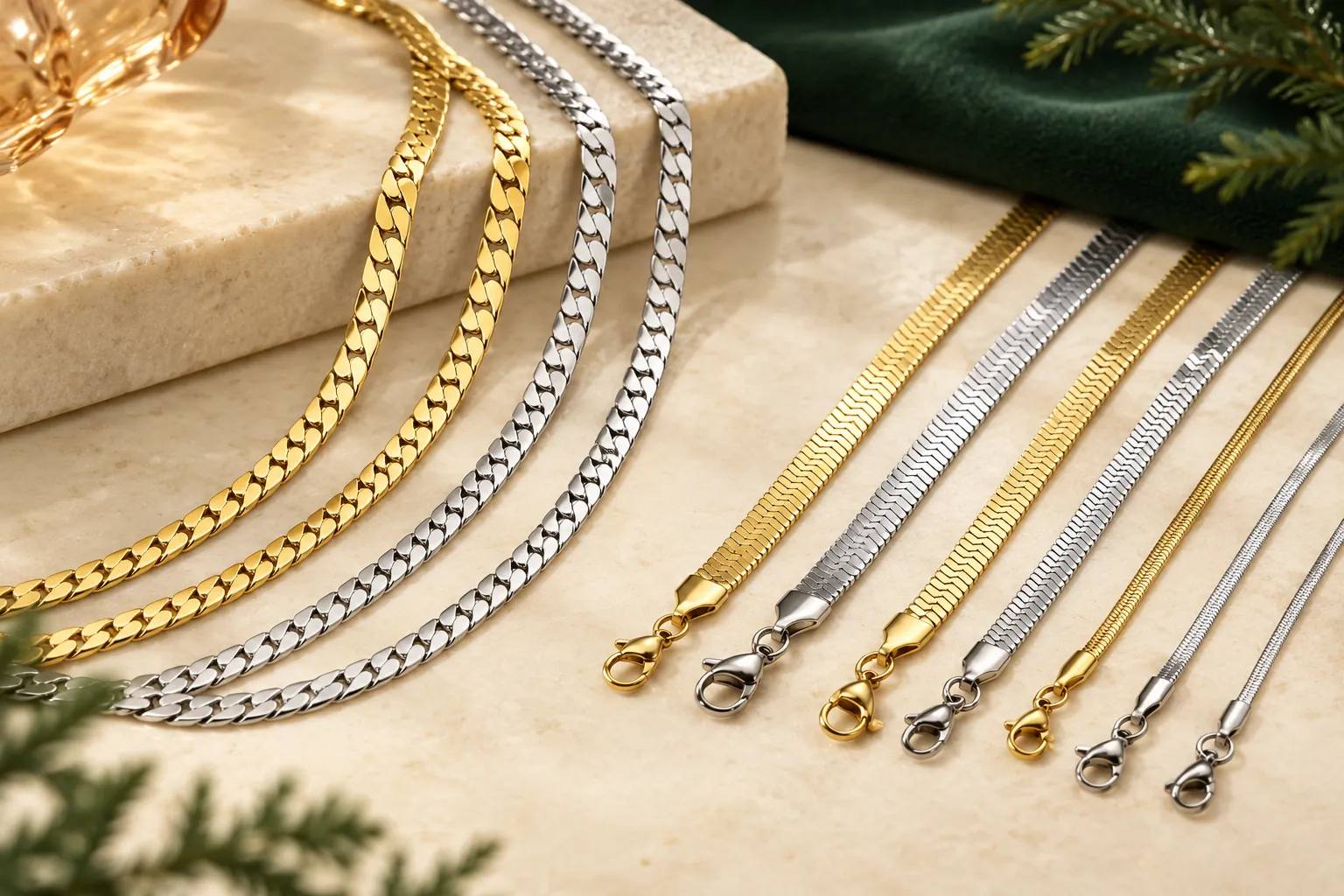
Our Gold / 18inches / 4MM finished-chain option suits a defined configuration enquiry. The flat snake-chain range adds 2–5mm labels and four lengths. Choose between these routes by the pendant's opening, the desired profile and the length you intend to offer.
02 / 10 · Buyer guide
A Bail Connects the Pendant to the Chain
The bail is the connector that lets a pendant hang from a chain or connecting ring. That functional role is described in the TESDA jewelry-making glossary. For buying purposes, distinguish the usable inside opening from the outside decorative shape of the bail.
A large-looking pendant can have a small internal passage, while a modest pendant can use a more generous opening. We recommend measuring the clear passage that the chain actually uses. The decorative face of the pendant and its total height are separate dimensions and do not establish chain clearance.
Further reading: TESDA: jewelry-making glossary.
Dimensions With Different Jobs
- Pendant bodyControls visible scale and the main decorative form.
- Bail clear openingDefines the passage available to the chain or its fittings.
- Chain assemblyIncludes the chain body and the end components encountered during threading.
03 / 10 · Buyer guide
The Largest End Fitting Can Decide the Choice
A chain body may fit through the pendant while its end tab or connecting ring does not. This is why a nominal chain profile alone cannot establish compatibility with a finished necklace. Identify the direction in which the pendant will be threaded, then examine the parts encountered along that path.
If the pendant is added before an end fitting is attached, the assembly requirement differs from sliding it onto a ready-made chain. State which route your project needs. We would keep a ready-to-thread product separate from a component arrangement that depends on later assembly work.
Follow the Actual Threading Path
- 1 · Choose the assembly directionIdentify which end enters the pendant opening.
- 2 · Find the largest passing componentCompare the body, end tab and connecting ring.
- 3 · Evaluate the passageUse the pendant's usable opening rather than its outside dimensions.
04 / 10 · Buyer guide
A Single Gold Finished-Chain Configuration
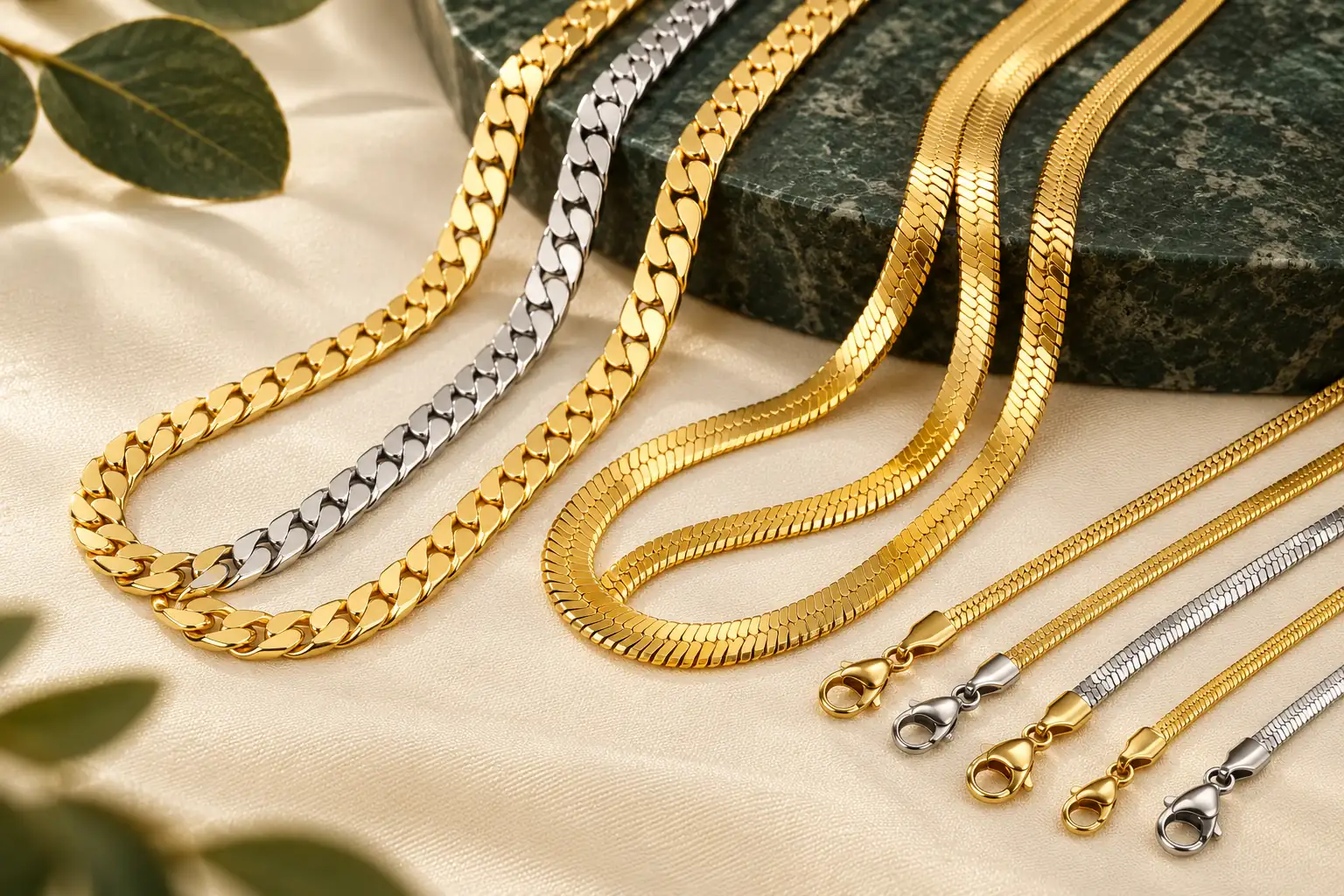
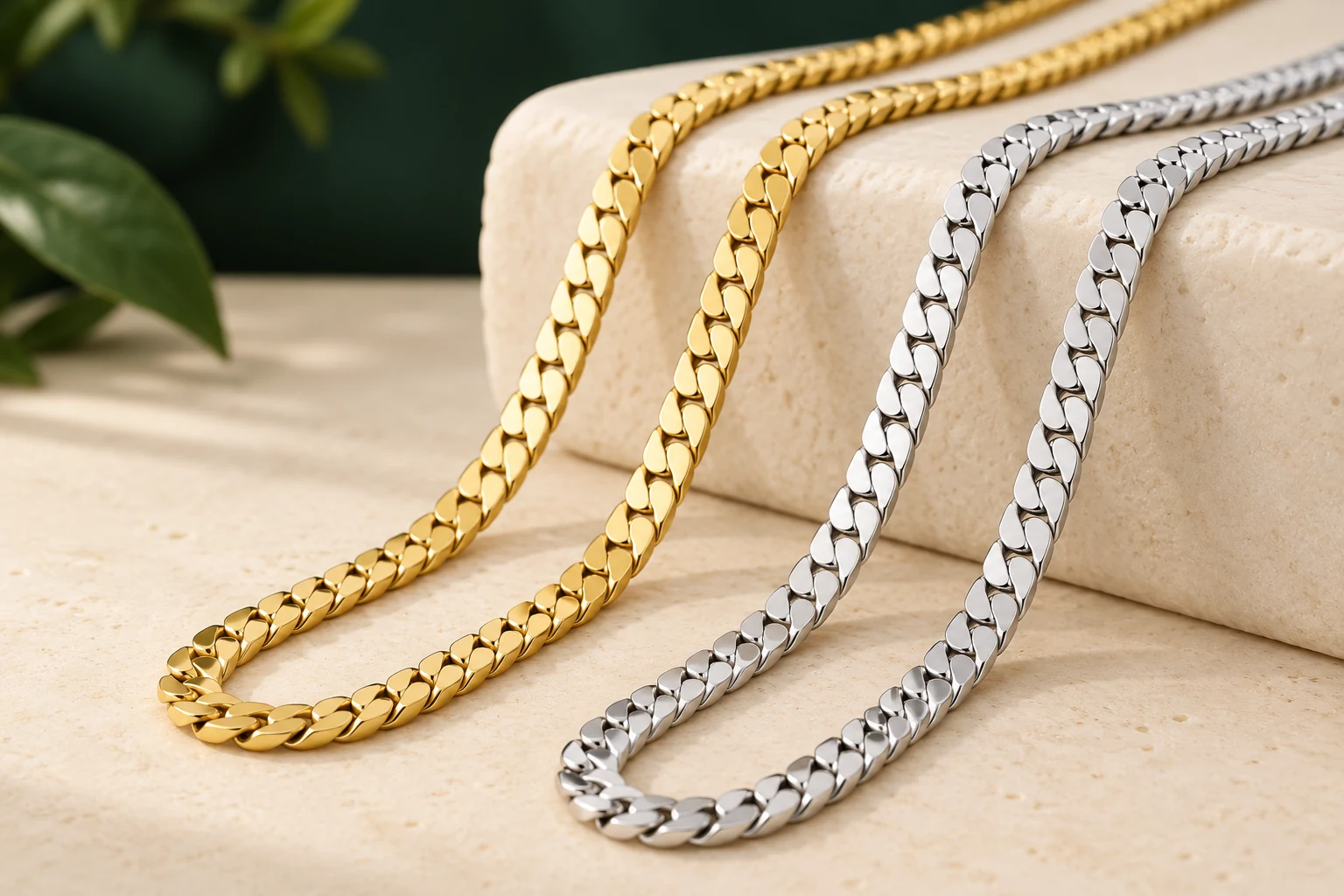
Our plain-link finished-chain direction lists Gold, 18 inches and 4MM as one actual combination. It has a stainless-steel material description and no named main stone. Use it when you want a specific starting chain rather than an undefined mixture of styles and lengths.
The wider product wording mentions several link directions, but those names do not create independent selectable chain types. Keep the actual product photograph and complete Gold / 18inches / 4MM label together. The 4MM term still needs its measurement axis when you compare it with a narrow or shaped bail passage.
05 / 10 · Buyer guide
Three Chain Routes With Different Selection Work
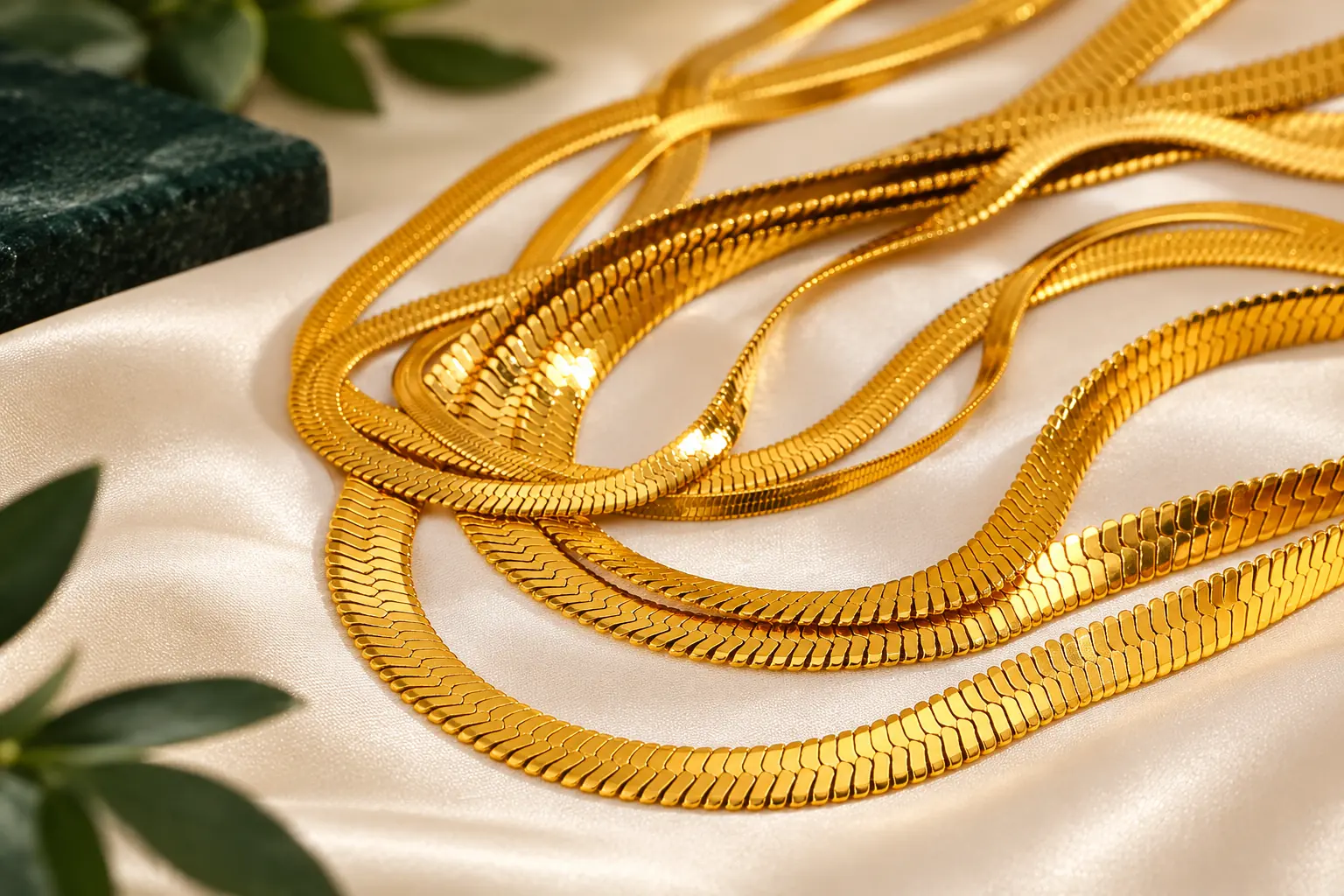
The fixed-length flat snake range has Gold and Silver at 2, 3, 4 and 5mm labels, each with 16, 18, 20 and 24-inch choices. It is useful when you need a named profile-and-length grid for an assortment.
The alternative steel snake-chain direction has Gold or Steel Color with the same 2–5mm labels, but its length reads as require. Choose that route when a particular steel construction and proposed length are part of the brief. Keep the three product families separate so their option structures remain clear.
Finished-Chain Starting Points
| Direction | Existing selection | Useful task |
|---|---|---|
| Plain-link steel chain | Gold / 18inches / 4MM | One defined chain configuration |
| Fixed-length flat snake | 2–5mm · Gold/Silver · 16–24 inches | A structured profile-and-length assortment |
| Alternative steel snake | 2–5mm · Gold/Steel Color · as require | A selected steel profile with length to agree |
06 / 10 · Buyer guide
Clearance Is a Shape Comparison
A bail opening may be round, oval or another shape, and an end fitting may pass only in a particular orientation. Compare the limiting dimensions of both parts instead of looking at one width value in isolation. The chain must move through the actual opening without forcing the parts.
There is no universal clearance allowance supplied for these chains. We would assess the selected geometry rather than invent a fixed extra millimeter rule. For a close fit, a physical assembly review is more useful than a calculation based on the chain's marketing label alone.
A Useful Clearance Comparison
- Opening sideClear inside height, width and any narrowing through the passage.
- Passing sideLargest component and its orientation during threading.
07 / 10 · Buyer guide
The Chain Must Also Suit the Pendant Visually
Once the assembly path works, compare the pendant with the chain face and edge. A flat profile creates a different visual relationship from a more open link form. Select the combination that supports the pendant rather than allowing the chain to compete with its outline.
For a range containing different pendants, do not assume one chain is the right partner for all of them. A repeated chain can simplify the offer only when each selected pendant has been considered for its own opening, decorative scale and intended wearing arrangement. Keep that grouping visible in your buying selection.
08 / 10 · Buyer guide
Wearability Includes Movement at the Connection
A pendant should be assessed on the assembled chain, where its position and movement can be seen. An opening that accepts the fitting during assembly does not describe how the pendant sits once the necklace is worn. The bail's orientation and the chain profile remain part of that visual review.
Compare a front view and a side view rather than relying on a static close-up of the pendant face. This helps you identify an unwanted tilt or a crowded connection before deciding that the pairing is suitable. It is a design assessment, not a claim of completed testing by our factory.
Two Views of the Assembled Choice
- Front viewPendant centering, visible proportion and the chain's decorative role.
- Side viewBail orientation, connection crowding and the way the pendant hangs.
09 / 10 · Buyer guide
A Reusable Pairing Record
Keep one record for each pendant-and-chain combination. Include the selected chain option, the pendant opening and the largest end fitting, then attach a view of the assembled pair. That record is more useful for repeat enquiries than a generic statement that the chain fits pendants.
If you change the chain width, fitting or pendant bail, treat the pairing as a changed configuration. A previous fit result belongs to the earlier parts. Retaining that distinction keeps a simple repeat order from becoming an unreviewed component substitution.
Keep the Pairing Connected
- Pendant referenceSelected design and usable bail opening.
- Chain referenceActual option, profile and finished length.
- Assembly referenceLargest passing component and assembled front/side views.
10 / 10 · Buyer guide
Your Existing-Pendant Chain Brief
Send the pendant reference and the way it will be assembled, followed by the actual chain option you prefer. Include the clear bail opening, the relevant end-fitting dimensions and the intended necklace length. These inputs identify the remaining fit decision without leaving the whole product undefined.
We can discuss a selected finished chain or a separate assembly request around those details. If you need to change the chain ends or the pendant connector, identify that change explicitly so the proposed scope can be considered without implying that every existing chain is universally compatible.