01 / 10 · Wholesale jewelry
Specifying a Layered Necklace Configuration
We are a jewelry factory in Qingdao, China. A layered necklace should be selected by the relationship between its chains, not only by the number of strands in a photograph. We recommend defining the short layer, longer focal layer and connection arrangement separately. This helps you choose a ready layered design or build a coordinated combination from individual necklaces.
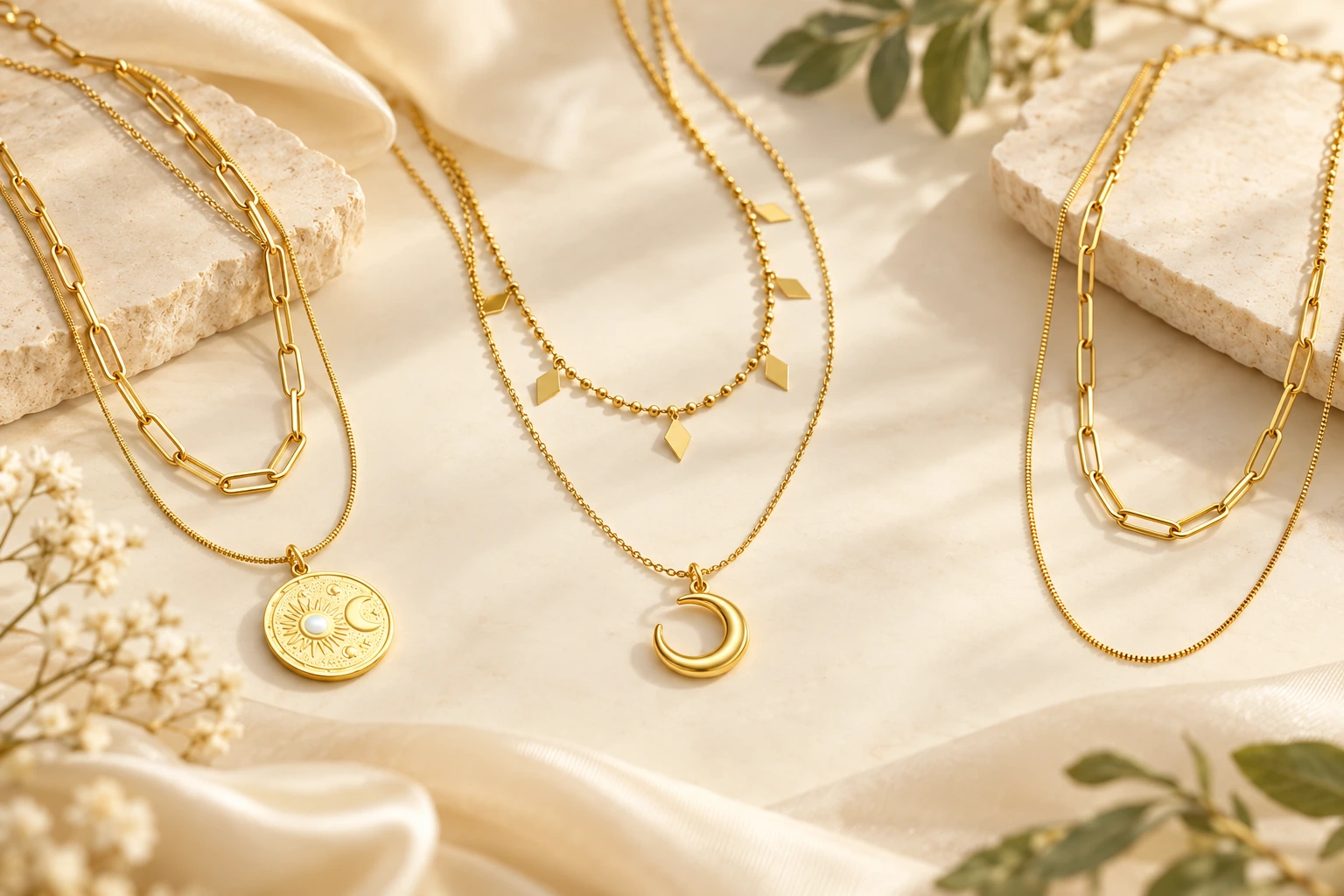
Our snake-and-paper-pin choker, moon/sun/star double-layer range and nine-version vintage range provide existing layouts. A flat chain with four actual lengths offers a separate route when you want more control over the length relationship.
02 / 10 · Buyer guide
Choose Ready Layers or Separate Necklaces
The snake/paper-pin choker has Gold 1, Gold 2 and Gold 3 at 16 inches. The moon/sun/star range has three Gold motif choices at 18 inches. These are existing layered design directions, while the flat chain offers 16, 18, 20 or 24 inches as separate actual lengths.
Choose an existing layered layout when its photographed arrangement fits the concept. Choose separate necklaces when you want to select lengths independently. The second route gives more configuration choice, but also means more closures and separate retail-item decisions rather than an assumed integrated set.
Choose Ready Layers or Separate Necklaces
- Ready16-inch layoutSnake/paper-pin Gold1–3 · Select photographed arrangement
- Ready18-inch layoutGold moon,Sun or Star · Select motif and layered structure
- Independent combinationFlat chain in four lengths · More control,more separate pieces
- Vintage layoutGold1–9 at16inches · Broad design choice at one known label
03 / 10 · Buyer guide
Define Each Layer's Position
A product-level 16-inch or 18-inch label does not specify a separate length for every layer. Keep the short chain, focal pendant chain and any hanging drop as separate geometry in your review. A charm adds visible length below the chain even when the chain measurement is unchanged.
Use a simple layout sketch to show where you want each element to sit. For ready designs, compare that sketch with the actual selected arrangement. For separate necklaces, use their known lengths as a starting point while allowing for pendant size, wearer fit and closure construction.
Define Each Layer's Position
- Upper layerIntended short-chain position · Sets the neckline frame
- Lower chainIntended focal-chain position · Creates separation
- Pendant or charmDrop below the chain · Adds visual length
- ConnectionShared or separate closure · Changes handling and supplied contents
04 / 10 · Buyer guide
Use Chain Texture to Separate the Layers
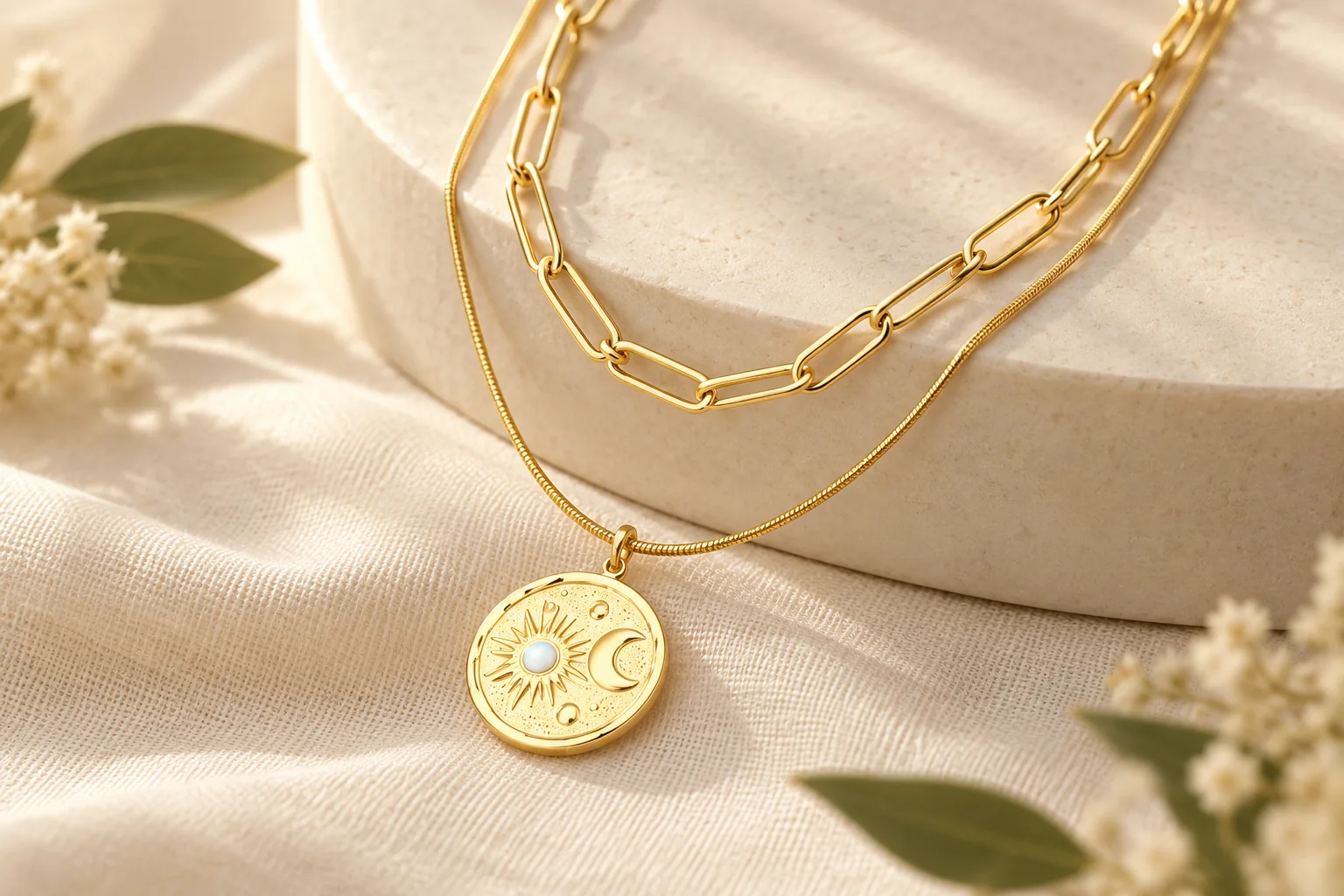
The snake/paper-pin range combines flat-chain and visible-link directions with celestial coin styling. Those contrasting textures can help the eye distinguish the upper and lower elements. The selected Gold number matters because the actual arrangements differ.
Choose one texture as the quieter frame and the other as the focal carrier. A broad reflective chain can compete with a large pendant if both demand attention. A finer chain can let a coin or charm lead. These are styling choices to evaluate on the selected layout rather than assumptions that every numbered version contains the same chains.
05 / 10 · Buyer guide
Use Actual Length Options for Independent Layering
The flat snake-blade chain offers 16, 18, 20 and 24 inches, with Gold/Silver 2–5mm labels. Two selected lengths can form a deliberate starting combination, but their difference is not a guaranteed visible gap on every wearer. Pendant drops and neck shape also affect the final arrangement.
Choose the length relationship before adding profile variations. If both chains change width and color as well as length, it becomes harder to judge which feature improves the layout. A controlled comparison gives you a clearer decision about the layered effect.
Use Actual Length Options for Independent Layering
- 16and18inchesCloser listed pair · Actual pendant drops
- 16and20inchesWider listed difference · Wearer-specific position
- 18and24inchesLonger lower-chain direction · Closure and supplied unit
- Any selected pairReal catalog lengths · Not a universal anti-tangle guarantee
06 / 10 · Buyer guide
Select Motifs That Have Different Visual Jobs
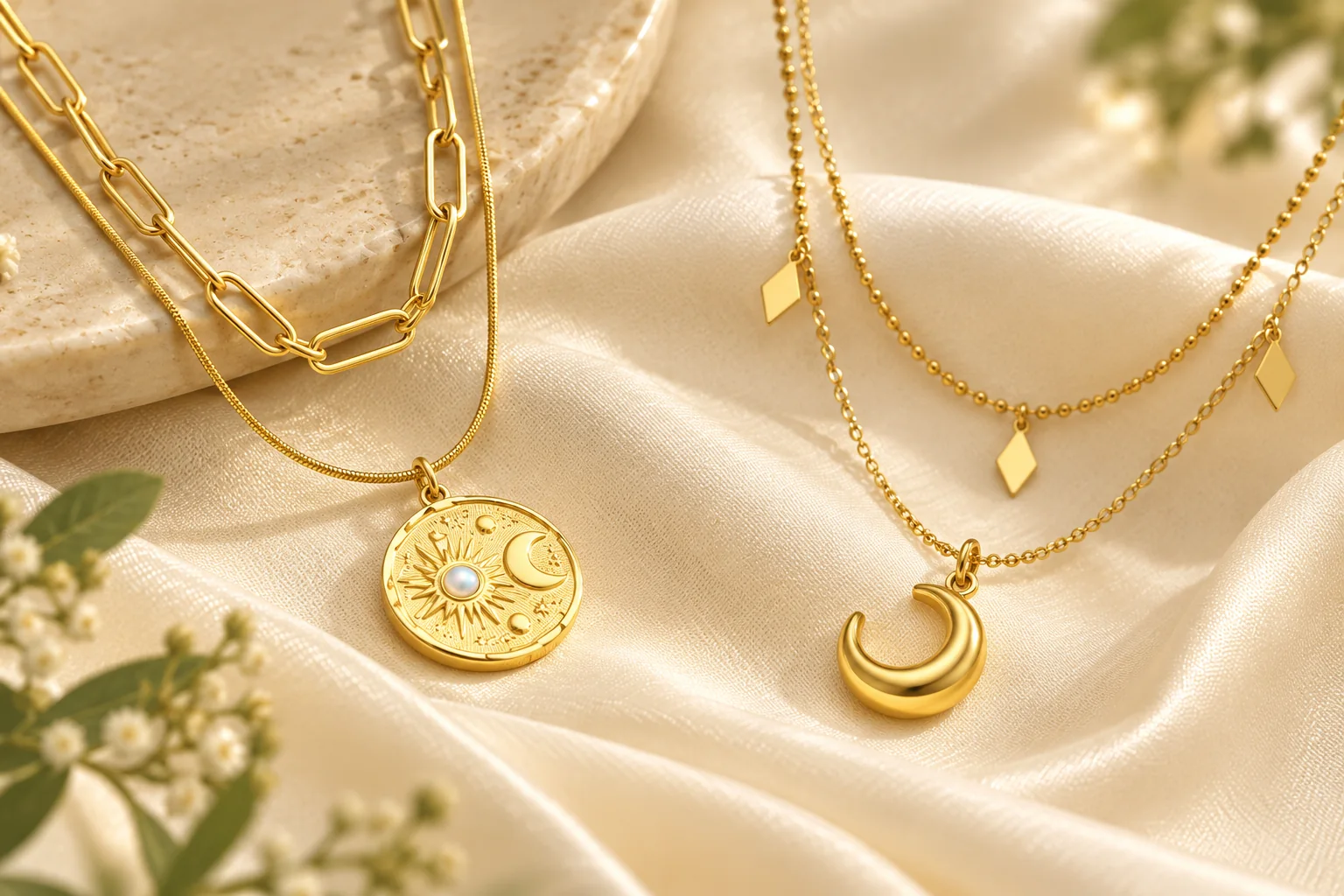
The double-layer range offers Gold moon, Gold Sun and Gold Star at one 18-inch expression. The snake/paper-pin range has celestial coin directions within three numbered layouts. Choose the motif you want the customer to recognize, then keep supporting elements quieter.
A layered line does not need several competing symbols on every piece. A small upper-chain accent can frame a stronger lower pendant. Use the actual selected photograph to identify the arrangement rather than assigning every celestial shape to every option simply because the range title mentions several motifs.
07 / 10 · Buyer guide
Keep the Selected Decoration Accurate
The nine-version vintage range lists onyx at product level, but a chosen Gold-numbered layout still needs its decorative composition identified if onyx is essential to your purchase. A layered appearance alone does not show a mineral identity. The moon/sun/star range is metal-led with no main stone specified.
For customer copy, describe the actual visible chain and motif arrangement, then add a stone statement only where it belongs to the selected version. This lets the product remain informative without filling a neat specification table with a mineral inferred from the collection name.
Keep the Selected Decoration Accurate
| Range | Actual selection fact | Description rule |
|---|---|---|
| Vintage layered | Gold1–9,16inches | Identify selected decoration |
| Moon/Sun/Star | Three motifs,18inches | Keep chosen motif separate |
| Snake/paper-pin | Gold1–3,16inches | Use actual chain/coin layout |
| Stone-specific purchase | Named requirement | Selected component identity |
08 / 10 · Buyer guide
Review Connections and Movement as an Assembly
Layered chains can share a closure or remain separate pieces. The actual arrangement affects handling, adjustment and how the layers move relative to one another. Review the back and connection as well as the front layout before deciding how to describe the retail unit.
A layered design does not establish that tangling is impossible. Instead, evaluate the selected construction and explain the intended handling and storage. For separate necklaces, keep each product's closure and length in the record. For an integrated design, record the supplied chain arrangement rather than assuming a photo defines it completely.
09 / 10 · Buyer guide
Define the Supplied Unit Before Photographing a Set
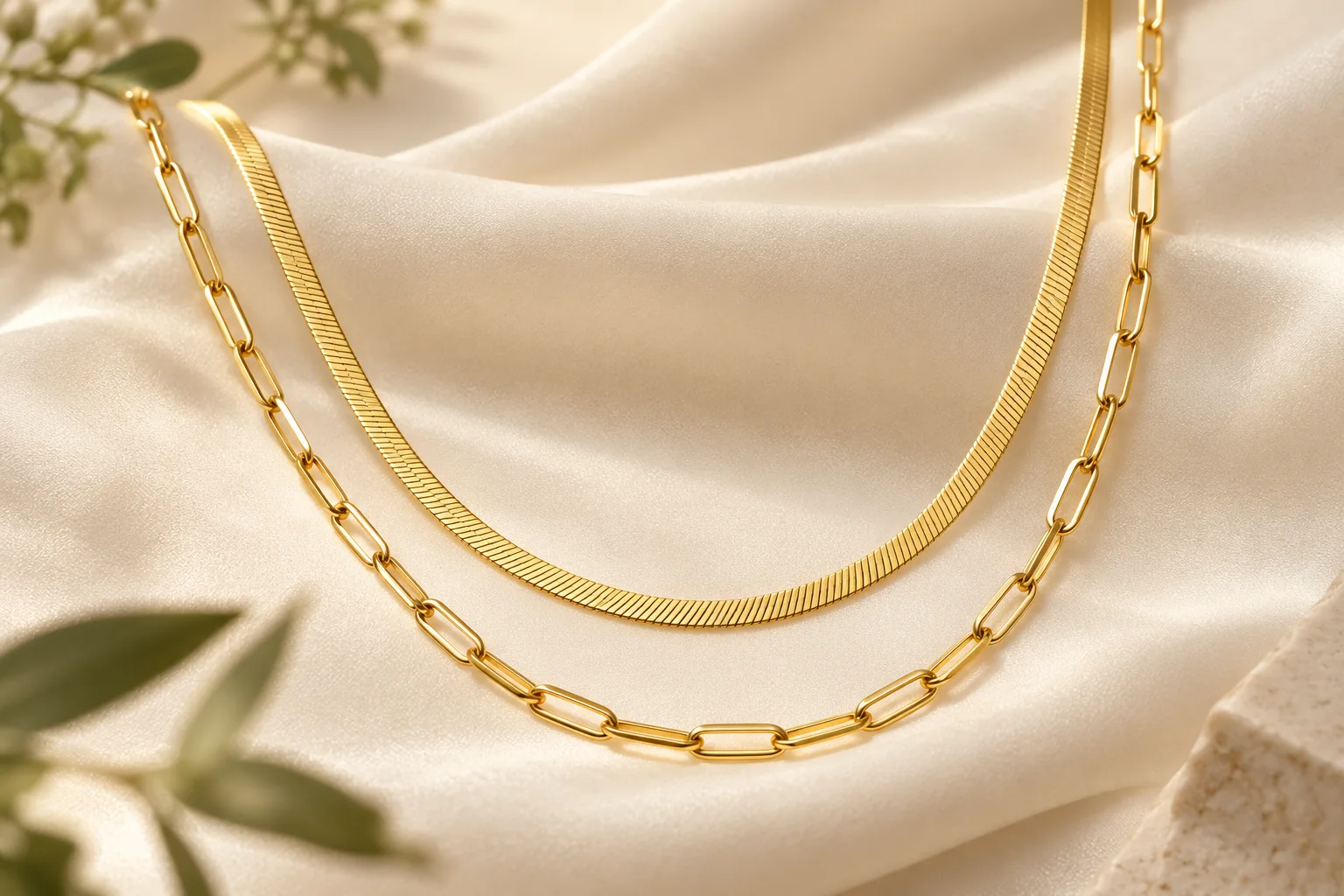
A styled photograph can show several necklaces together without supplying them as one item. Decide whether your retail unit is one integrated layered necklace, a specified multi-piece combination or separate products shown for inspiration. This decision affects the product title, contents statement and packing arrangement.
Use the exact selected versions in the contents list. A second chain added for a campaign image should not silently become part of the order. Clear unit definitions also make replenishment easier because you can repeat the actual components instead of relying on a broad layered-set nickname.
Define the Supplied Unit Before Photographing a Set
- Integrated necklaceActual supplied layer arrangement · One specified assembly
- Multi-piece combinationEach included necklace and option · Separate components counted
- Separate productsStyled together only · Independent retail units
- Campaign displayAll featured items identified · Image is not a contents promise
10 / 10 · Buyer guide
Send the Layer Layout You Intend to Sell
Send the exact ready-layout option or the individual chains you want to combine, with target quantities and your intended selling unit. Include the desired layer positions, selected motifs and any connection or fit requirement. We can discuss that configuration and the applicable sample or order arrangements.
Choose an existing layered design when the layout already works, or independent lengths when control over the relationship is the priority. Keep product-level length labels, individual layer measurements and pendant drops distinct. That turns a layered look into a product specification a buyer and customer can understand.
Send the Layer Layout You Intend to Sell
- Existing photographed layoutReady layered option · Exact Gold number or motif
- Independent length controlSeparate actual chain lengths · Each product and closure
- Specific stone requirementSelected component specification · No mineral inferred from layout
- Clear retail offerDefined supplied unit · Itemized contents