01 / 10 · Wholesale jewelry
Qualifying a Second Jewelry Supply Source
We are a jewelry factory in Qingdao, China. When you need a second source, begin by deciding whether you require a close replacement or a compatible alternative. Those are different buying tasks. A replacement must match the agreed essential features; an alternative can preserve the collection role while changing the design.
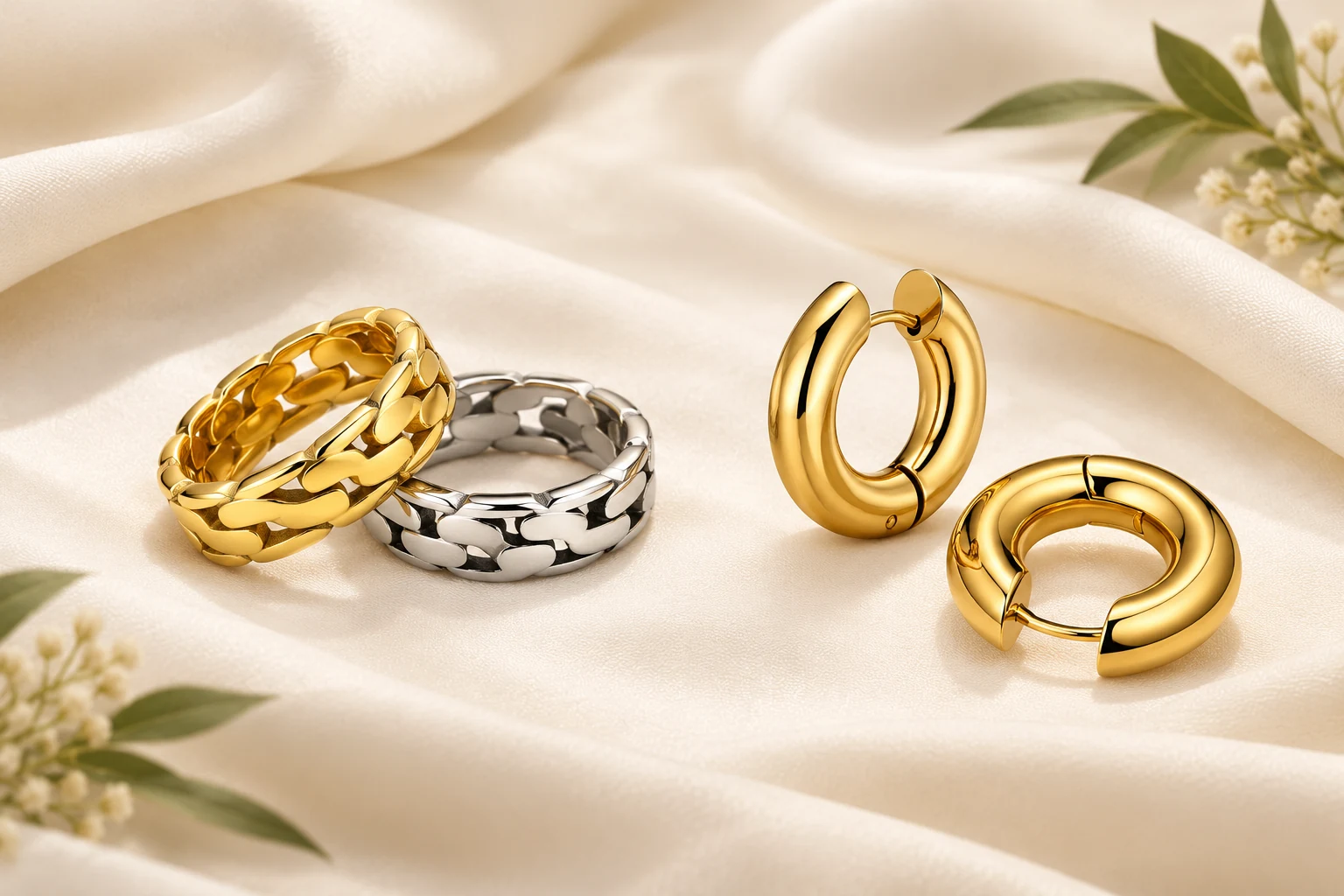
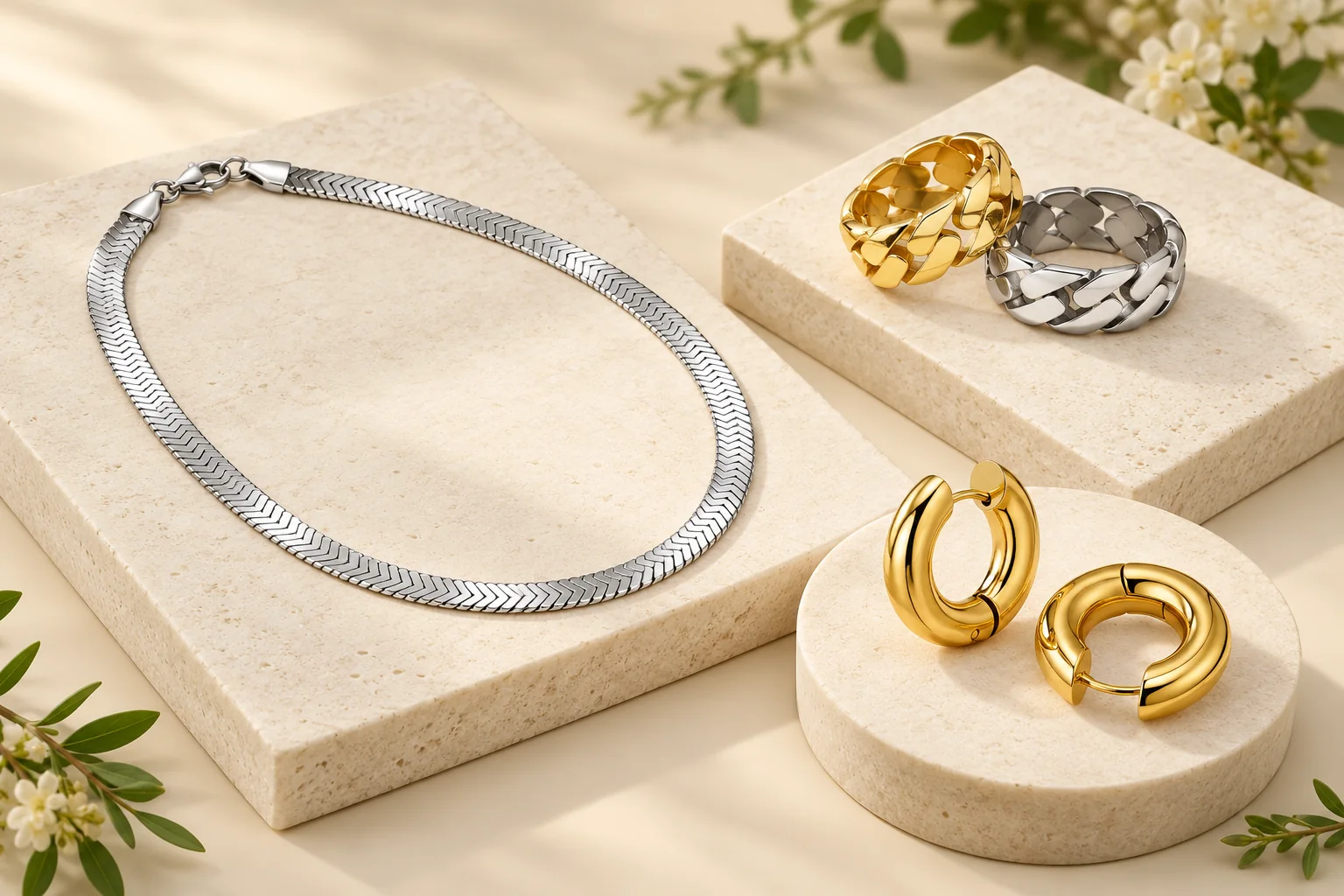
We recommend working from an authorized sample and a written feature comparison. Our catalog provides steel solitaire necklaces, 925-silver knot jewelry and geometric rings that can help define a direction, but a similar photograph alone does not establish equivalence to your existing product.
02 / 10 · Buyer guide
Define the Features that Must Match
Break the existing piece into material, decorative element, setting, dimensions and wearing hardware. A necklace with the same outline can use a different chain construction or stone. A ring with a similar front can have a different profile and fit.
Our steel solitaire specifically uses cubic zirconia and bezel setting. The silver knot range has separate Zircon and Moissanite options. These are useful examples of why a clear stone cannot be treated as one interchangeable material. Keep the essential identity separate from color or shape resemblance when you define the second-source target.
Define the Features that Must Match
- Base materialSteel solitaire versus925silver knot range · Similar color is not material equivalence
- StoneCubic zirconia, Zircon or Moissanite wording · Retain the actual selected identity
- SettingBezel versus claw-setting direction · Compare construction, not sparkle alone
- HardwareChain, post, clasp or band · Match the wearing requirement
03 / 10 · Buyer guide
Choose Exact Match or Collection Compatibility
An exact-match request needs tightly defined essential features and agreed differences. A compatible alternative can be chosen for the same commercial role without claiming to be the same piece. For example, a steel solitaire can occupy a simple pendant slot in a collection even if your existing necklace uses a different setting.
Choose the exact-match route when interchangeability is essential to your product description or repeat supply. Choose the alternative route when your priority is maintaining a style direction while diversifying the range. Keeping these routes separate prevents a visual substitute from being sold as an unchanged repeat.
Choose Exact Match or Collection Compatibility
- Replacement targetEssential material, dimensions and operation · Documented differences
- Compatible alternativeCollection role and intended appearance · A clearly different design
- New collection additionShared styling direction · Independent product specification
- Unchanged reorderPrevious accepted source/version · Not a second-source qualification
04 / 10 · Buyer guide
Use the Authorized Reference as a Physical Baseline
A physical reference can show the side, back, connection and operating details that a front photograph misses. Supply only designs and samples you are authorized to use. Identify which features are functional requirements and which are merely part of the reference appearance.
For a necklace, inspect the pendant passage and closure. For a ring, compare the band interior and profile as well as the decorative face. We can then discuss a defined target rather than inferring hidden features from an image. An authorized reference supports evaluation; it does not establish ownership of every design feature.
05 / 10 · Buyer guide
Resolve Material and Stone Identity Before Appearance Claims
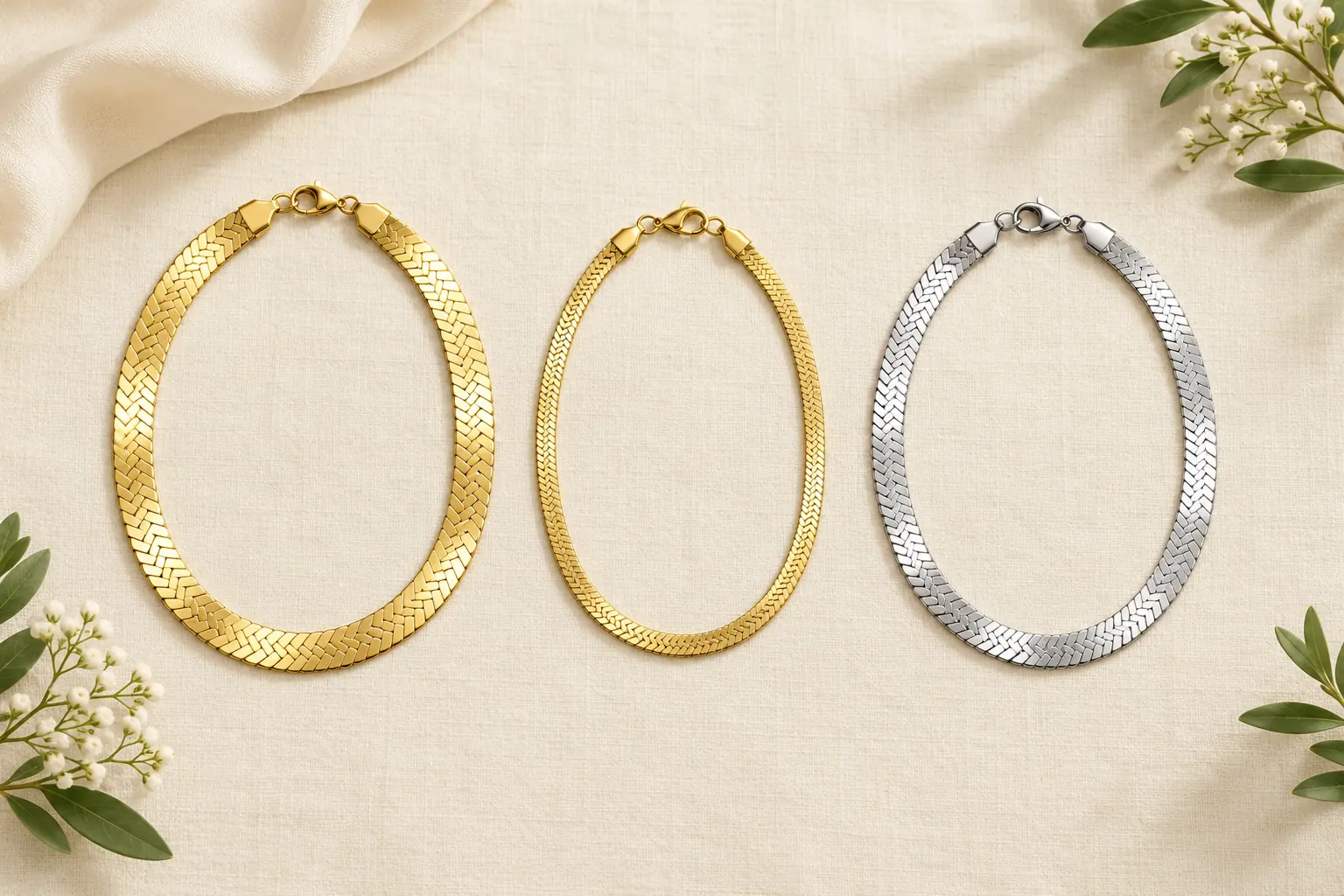
The 925-silver knot range offers Silver E-Zircon, Silver N-Zircon, Silver E-Moissanite and Silver N-Moissanite choices. The stone wording and E/N codes should remain intact while the supplied piece is identified. A product-family description does not mean every choice contains both stones or a complete necklace-and-earring set.
For second-source selection, decide which of those distinctions is essential to your existing line. If the stone identity must remain unchanged, a visually similar alternative is not sufficient. If appearance is the goal, describe the replacement as a different specified product rather than transferring the old material claim.
Resolve Material and Stone Identity Before Appearance Claims
- Knot range stoneZircon or Moissanite alternatives · Keep selected stone identity
- Knot range contentsE/N codes · Identify supplied piece or pieces
- Steel solitaireCubic zirconia, bezel · Different construction reference
- Geometric open ringSix Resizable shapes · Match shape and fit separately
06 / 10 · Buyer guide
Compare Fit Using the Same Measurement Definition
Matching a numerical size is only useful when both references use the same convention. A Resizable ring label cannot be compared directly with a fixed numbered size. Likewise, a necklace's stated overall length does not define its pendant drop or adjustment arrangement.
Use measurements that reflect the wearing requirement: inner ring dimensions, finished chain length, earring post geometry or bracelet circumference. Keep the measurement method visible in the comparison. This makes a difference actionable and avoids treating two unlike size labels as proof that the pieces will fit alike.
Compare Fit Using the Same Measurement Definition
| Product | Useful comparison | Avoid |
|---|---|---|
| Ring | Inner dimensions and profile | Equating Resizable with a fixed size |
| Necklace | Finished length and pendant position | Using chain label as drop measurement |
| Earring | Post and closure geometry | Comparing front views only |
| Bracelet | Usable circumference and closure | Assuming equal fit from motif |
07 / 10 · Buyer guide
Review the Candidate as a Complete Piece
A second-source sample should be reviewed assembled, including the closure, connecting parts and decorations. Compare the same views and operations on both pieces. This is where a candidate can be suitable as an alternative yet unsuitable as a direct replacement.
Record the result feature by feature. A different chain profile may be acceptable if your collection permits it; a different stone identity may not be. The outcome should state which differences you accept, rather than collapsing the whole review into a general pass or fail without explanation.
08 / 10 · Buyer guide
Use Evidence that Covers the Candidate Version
A document or test result is useful only when its scope corresponds to the candidate you intend to buy. Material family, component construction and selected finish can affect whether an existing document is relevant. Do not attach evidence from the old supplier's product to a different candidate.
The same boundary applies to sampling: a lot-acceptance plan concerns the lot reviewed, not an automatic qualification of every future product. We can discuss the evidence and review requirements for the selected version. The catalog itself is a starting specification, not a substitute for a requested independent report.
Further reading: NIST acceptance sampling.
Use Evidence that Covers the Candidate Version
- Material statementSelected component and version · Not every item in the range
- Requested reportActual tested item or covered family · Not an unrelated prior product
- Candidate sampleAgreed comparison target · Not every future lot
- Lot reviewOrder under review · Not blanket supplier certification
09 / 10 · Buyer guide
Separate Qualification from the First Order
Candidate review, sample acceptance and a production order are separate decisions. A close sample does not establish the applicable quantity, delivery arrangement or unchanged long-term availability. Keep the commercial discussion attached to the version you actually evaluated.
For a second-source project, list essential matches, accepted differences and unresolved conditions before discussing the first order. If the result is an alternative rather than a replacement, give it its own product description and reference. That preserves clarity for your receiving team and your customers.
Separate Qualification from the First Order
- Target definitionEssential features and authorized reference · Candidate selection
- Candidate reviewFeature comparison · Accepted differences
- Sample acceptanceAgreed version · Order scope and terms
- First orderSpecified quantities and arrangements · Review of actual supplied goods
10 / 10 · Buyer guide
Send a Comparison Brief Rather than a Supplier Ranking
Send the authorized reference, the features that must match and the differences you can accept. Add the sales market, intended selling unit and target quantity. Existing product links can illustrate a construction direction, but your brief should identify whether you want replacement compatibility or a new alternative.
We can discuss a candidate on those terms. A useful second-source decision is based on the product you will receive and describe, not a ranking of suppliers or an unsupported claim that two similar pieces are identical. Keep the accepted comparison with the resulting order record.