01 / 10 · Wholesale jewelry
Developing an Original Necklace from Your Sketch
We are a jewelry factory in Qingdao, China. For an original necklace, the most useful starting point is the relationship between pendant, chain and connection. A sketch can show the intended look, but the design becomes wearable only when those parts work together. We recommend establishing that structure before adding finish alternatives or packaging.
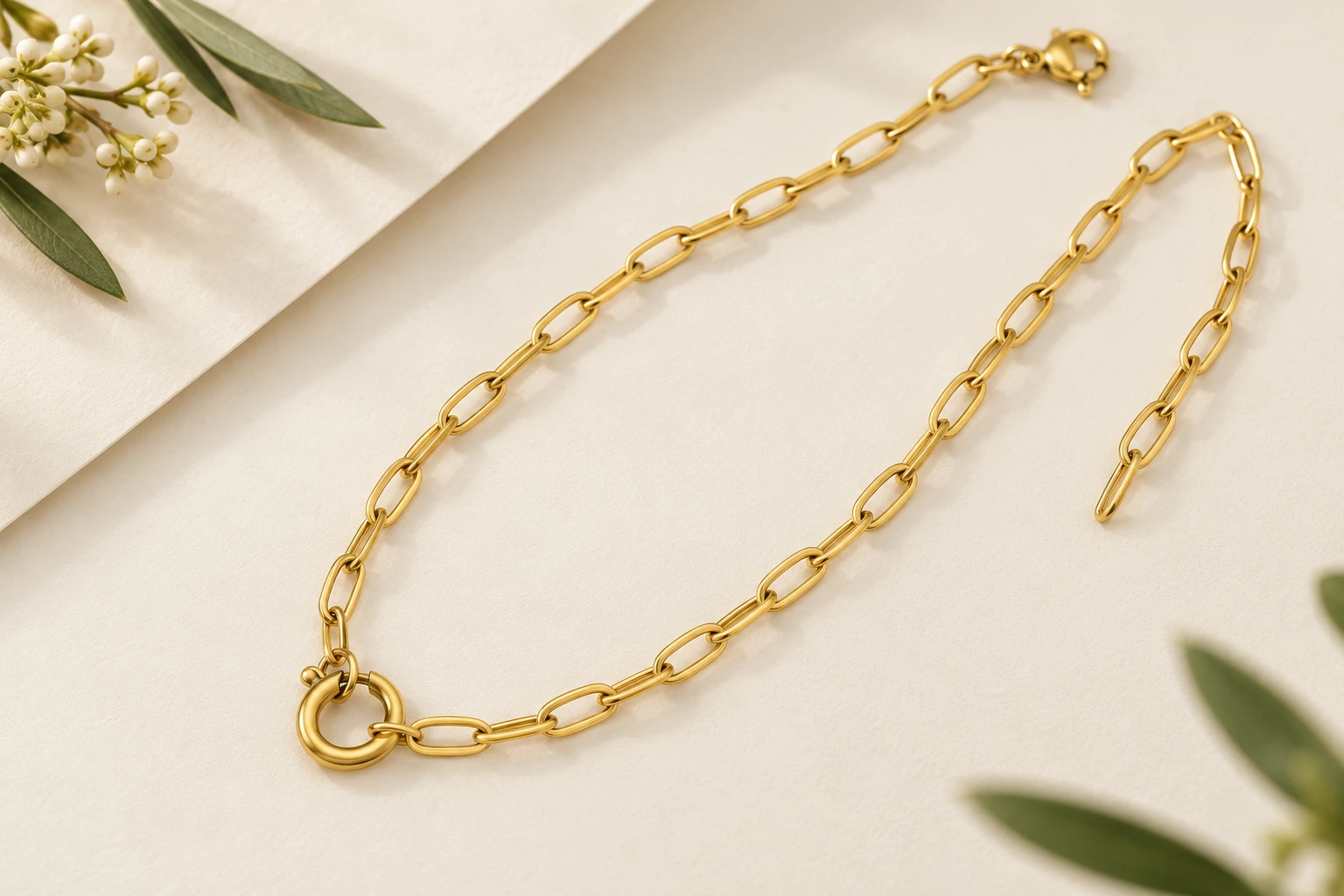
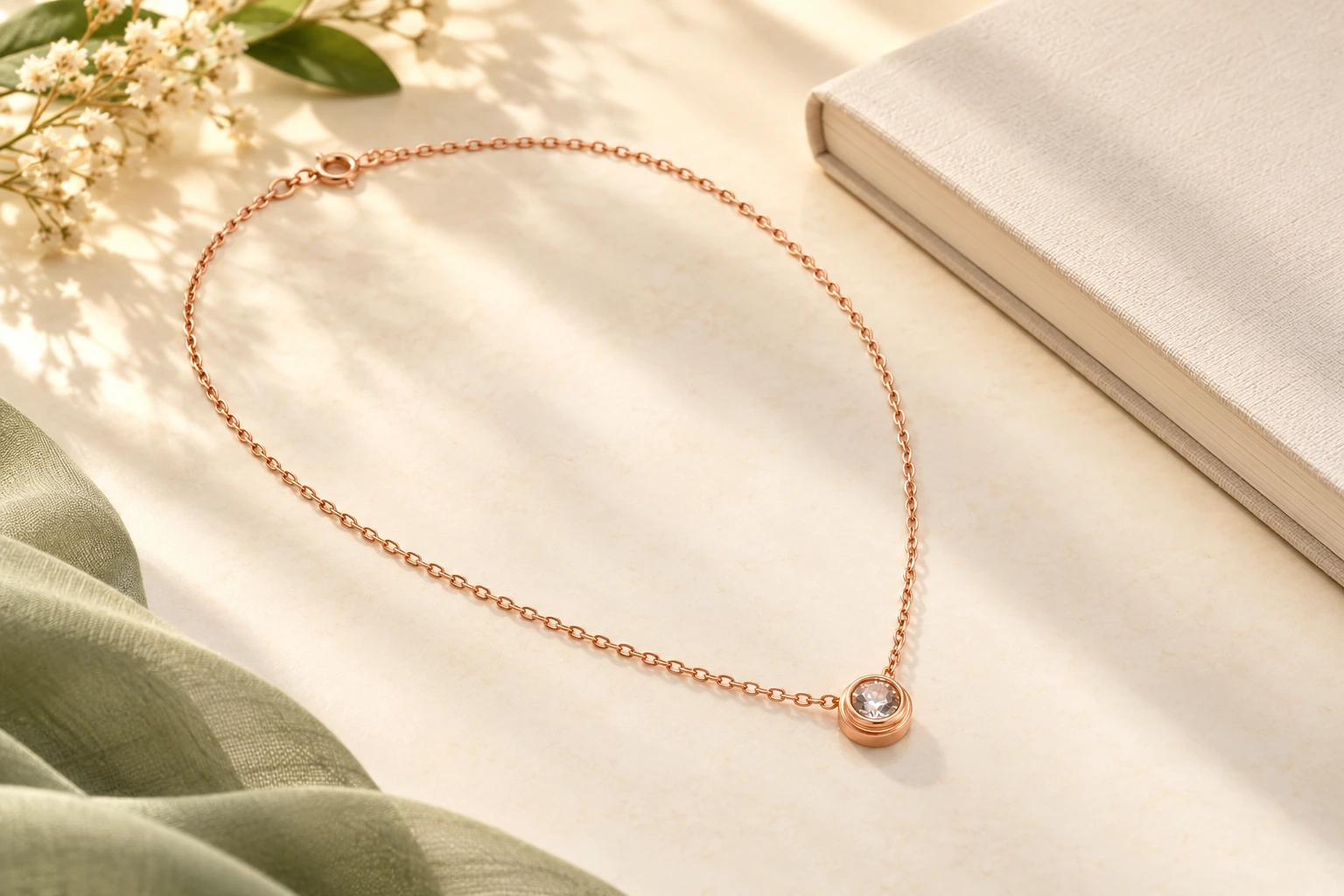
Our custom necklace offering allows a discussion of material, chain, style and inlay requirements. Existing bezel-solitaire and paper-pin chain designs provide concrete construction references; they are examples to learn from, not evidence that your new design has already been sampled.
02 / 10 · Buyer guide
Choose the Construction Direction First
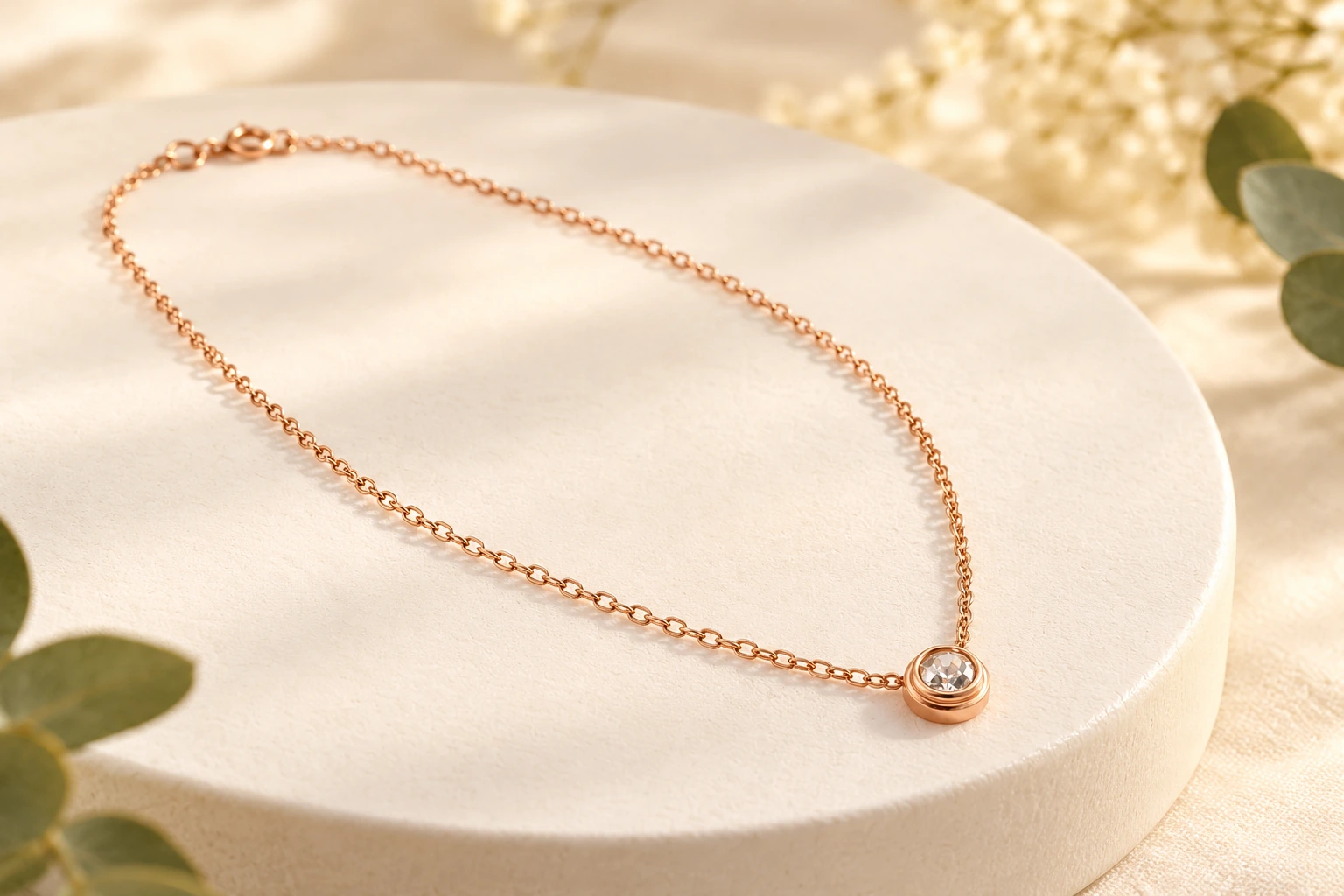
A bezel-set solitaire places one cubic-zirconia stone inside a surrounding metal setting. A paper-pin chain makes the links and connecting hardware part of the design. These are different starting points. The solitaire suits a restrained focal point; the chain-led direction suits a pendant whose attachment is deliberately visible.
If your drawing emphasizes a stone, begin with the stone and setting envelope. If it emphasizes a charm or removable pendant, begin with the connection and link proportions. Trying to resolve both through a decorative front view alone leaves the important assembly decisions undefined.
Choose the Construction Direction First
- Single-stone focal pointSteel cubic-zirconia bezel necklace · Stone envelope and setting outline
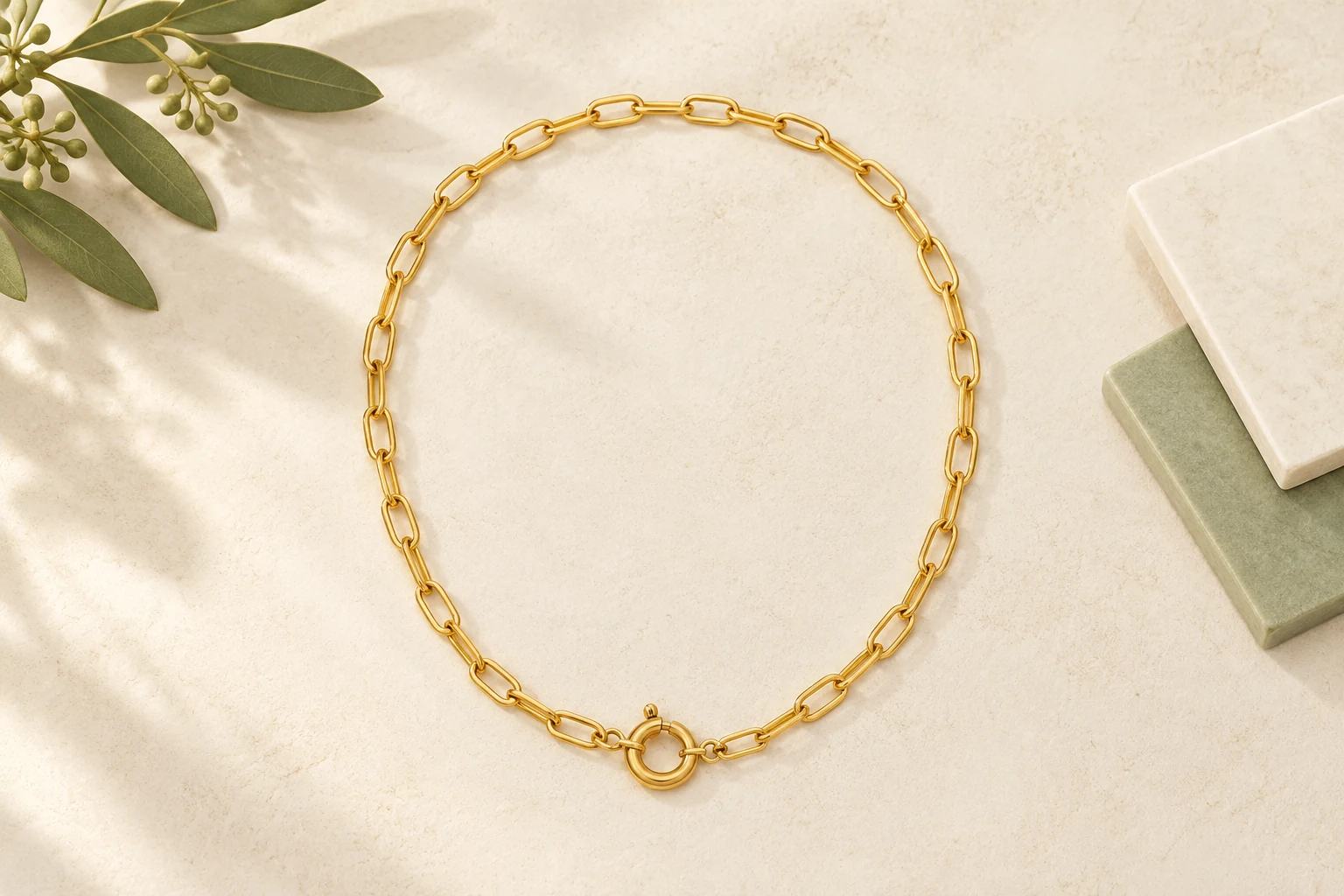
- Visible link structurePaper-pin chain range · Link proportions and pendant connection
- Original formCustom necklace offering · Material, chain, style and inlay brief
- Wearable proportionYour intended wearer and neckline · Finished chain and pendant relationship
03 / 10 · Buyer guide
Define the Pendant in Three Dimensions
A front outline gives width and height, but the side profile determines projection and how the pendant meets the chain. Include the rear surface and attachment position in the design brief. A bail hidden behind the pendant and a visible connecting ring create different appearances at the neckline.
You can use a familiar necklace as a proportion reference without asking us to copy a protected design. Mark the dimensions that matter to your concept and distinguish them from decorative details that may be adapted. This makes a later sample comparison about measurable choices rather than whether the overall impression feels close.
Define the Pendant in Three Dimensions
- FrontPendant width and height · Visual scale against the chain
- SideProjection and setting depth · How far the piece stands out
- RearAttachment location and surface · Pendant orientation when worn
- ConnectionOpening and passing dimensions · Compatibility with chain hardware
04 / 10 · Buyer guide
Develop the Chain and Pendant Together
The paper-pin range lists five Gold-numbered versions with spring-round and lobster-clasp styling. Those connection ideas can guide a development conversation, but each chosen version has its own physical arrangement. A pendant opening must accommodate the widest part that passes through it, not merely the narrow chain segment.
For a permanently assembled necklace, the connection can be designed around the pendant. For an interchangeable concept, the removable path becomes central. Choose the intended assembly early so a visually successful pendant does not become incompatible with the selected chain or closure.
05 / 10 · Buyer guide
Make the Material Choice a Design Choice
Our custom offering includes stainless-steel, silver, brass and copper directions. These materials should be selected for the proposed construction and retail positioning, not treated as interchangeable names. A silver line and a plated-steel line tell different product stories even when the front silhouette is similar.
State the intended base material for the main pendant and chain separately. Small connecting parts also belong in the specification. We can then discuss the proposed combination without assuming that every material named in the custom offering is available for every shape, component or finish.
Make the Material Choice a Design Choice
- Pendant bodyRequested base material · Not determined by surface color
- ChainMaterial and construction · May differ from the pendant proposal
- ConnectionsBail, ring and closure requirements · Must support the intended assembly
- DecorationStone identity and setting direction · Not established by a generic cut name
06 / 10 · Buyer guide
Separate Color, Coating and Decorative Material
Gold and Silver are the two actual color directions in the custom necklace offering. Platinum plating, 24K gold plating and 18K gold plating are also listed as development directions. The color choice and coating specification therefore need separate places in the brief.
The existing solitaire illustrates the same distinction: its main material is steel, while its Gold, Silver and Rose Gold options describe appearance. For an original design, decide the target color first, then agree the applicable coating and component construction. Do not turn a gold-colored render into a solid-gold product description.
Separate Color, Coating and Decorative Material
| Brief layer | Example from the range | Decision for your design |
|---|---|---|
| Appearance | Gold or Silver custom direction | Target visual color |
| Base | Steel, silver, brass or copper proposal | Component construction |
| Coating | Named plating directions | Selected finish specification |
| Stone | Specified identity and dimensions | Actual decorative material |
07 / 10 · Buyer guide
Use the First Sample to Test the Design Logic
A development sample should answer the main structural decisions: whether the pendant hangs as intended, whether the connection works and whether the chain proportions support the focal point. It is more useful to settle those issues before multiplying colors or decorative variants.
For a bezel concept, inspect the setting outline and stone position. For a removable pendant, follow the full removal and reattachment path. A sample can reveal a design tradeoff without meaning the entire idea has failed. Keep the parts you approve and identify the exact feature that needs a revision.
08 / 10 · Buyer guide
Give Revisions a Clear Boundary
A length change, a new clasp and a different stone are separate revisions. Combining them in an unmarked image makes it difficult to understand which result you approved. Use the same reference drawing and show each intended change against it.
Where the concept is already working, keep unchanged dimensions fixed. For example, a pendant-size revision need not reopen the selected chain color unless the visual balance requires it. This keeps the development conversation focused and gives you a clearer basis for deciding whether a second sample is necessary.
Give Revisions a Clear Boundary
- Pendant proportionWidth, height or projection · Accepted chain and connection
- Chain fitFinished wearing length · Accepted pendant dimensions
- ConnectionBail, ring or clasp arrangement · Required removal or assembly path
- DecorationStone or setting detail · Accepted material and finish
09 / 10 · Buyer guide
Move from Design Approval to an Order Specification
Once the design is acceptable, gather the final drawing, component materials, chosen finish and sample reference into one version. Separate approval of the design from acceptance of commercial terms. Sample work does not by itself establish a production minimum, a fixed lead time or a guaranteed delivery date.
For the first production discussion, identify any unresolved feature explicitly. A design can be ready in appearance while a requested packing arrangement remains open. Keeping those matters separate avoids treating a complete-looking render as a fully agreed production order.
Move from Design Approval to an Order Specification
- Design directionSelected construction and dimensions · Production acceptance
- Sample reviewAccepted features and revisions · Unlimited further changes
- Order specificationFinal component and finish version · A fixed minimum or delivery date
- Commercial agreementConfirmed quantity and terms · Other unlisted capabilities
10 / 10 · Buyer guide
Send a Brief that Shows the Intended Necklace
Send your sketch, the intended wearer and use, pendant dimensions, chain direction and requested materials. Include a clear connection view and any existing product links that illustrate individual construction ideas. Mark which features must stay and which can be adapted.
We can discuss the development scope and applicable sample terms around that brief. The best original-design enquiry does not need a polished presentation deck. It needs a coherent necklace: a focal point, a chain that supports it and a connection that works. Those decisions give the creative idea a practical route into a sample.